Latest updates.
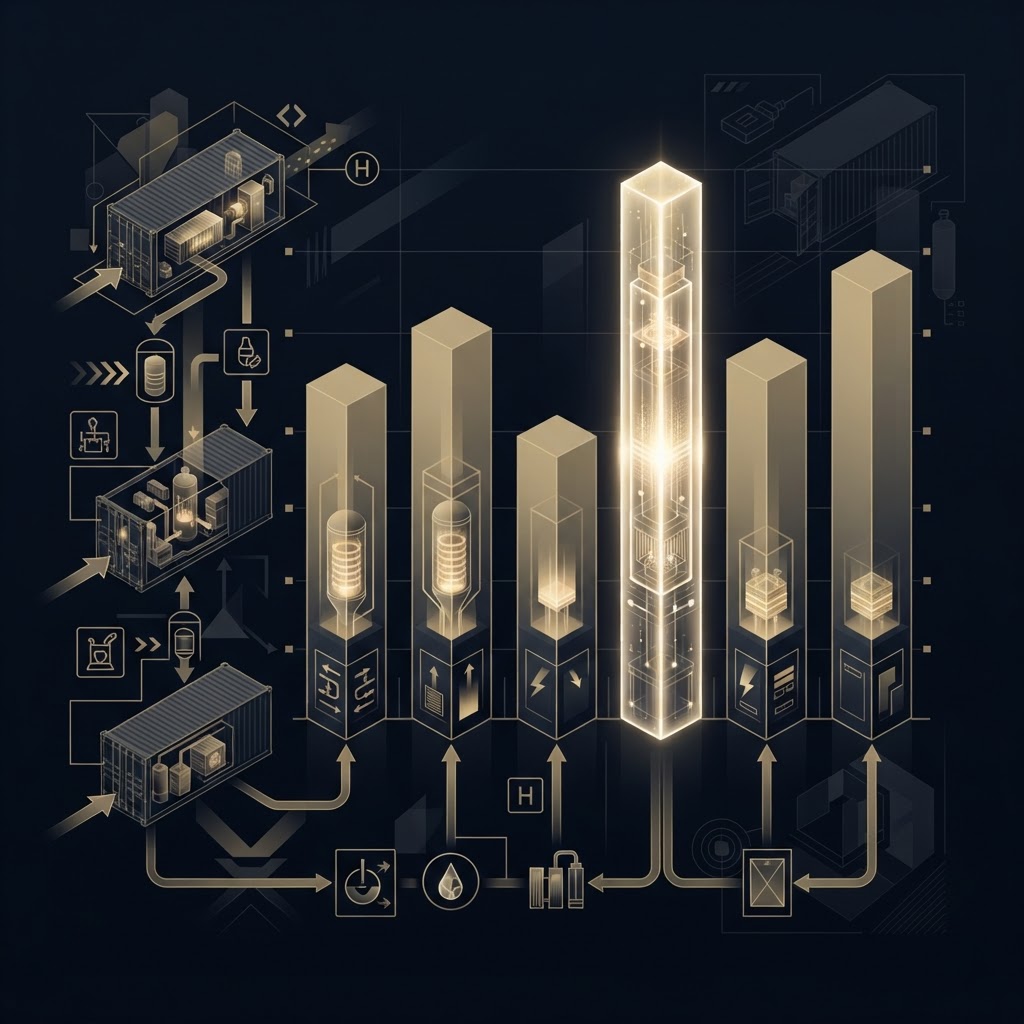
Waste to Hydrogen Plant: 6 Projects, One Honest Ratio
Six waste to hydrogen plants compared by feedstock, output and status, normalised to kg of hydrogen per tonne of waste so the outliers show.
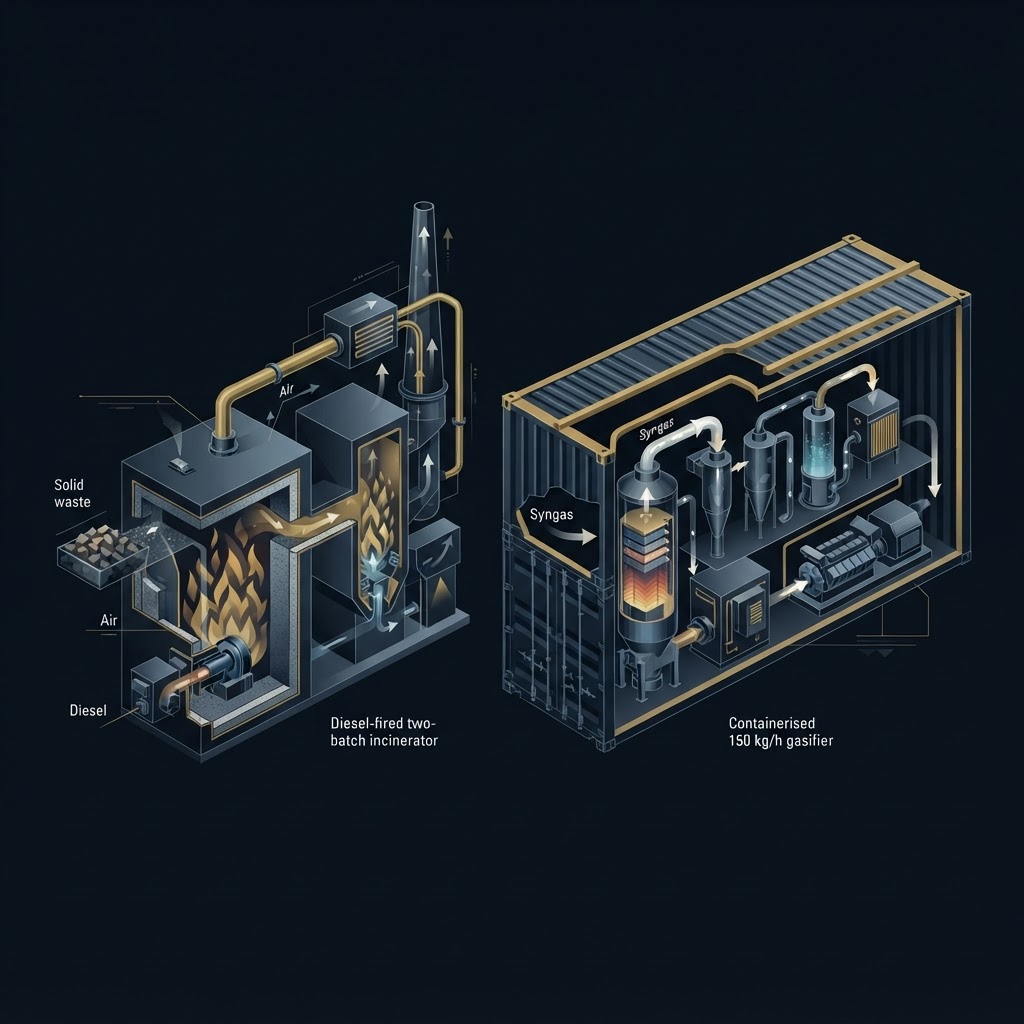
Small Scale Waste to Energy Incinerator: Buyer's Guide
Most small scale waste to energy incinerators burn diesel, not waste for power. What the spec sheets hide, what EU law demands, and when a gasifier wins.
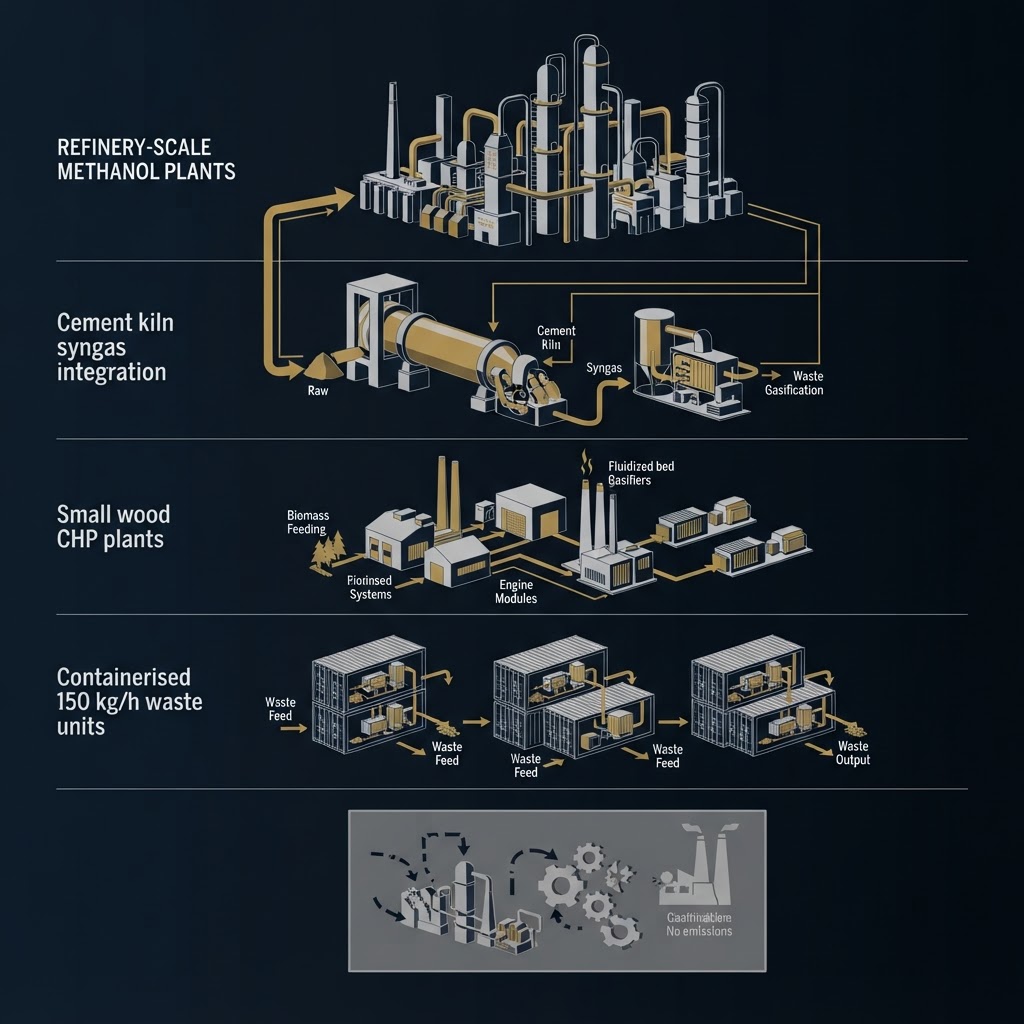
Waste Gasification Companies in 2026: Who Builds What
Waste gasification companies sorted by scale and evidence: who runs plants, who is financed, who is still at demo, who failed, and how to shortlist one.

What Your Offtake Tolerates: A Specification Guide for Syngas Purification
"Clean gas" is not a specification. The target is set by the most sensitive thing downstream — a combustion chamber forgives in ppm, a synthesis catalyst in ppb, a fuel cell almost nothing. SyngaPure maps its three stages to contaminant families, so changing the offtake moves the configuration with it.
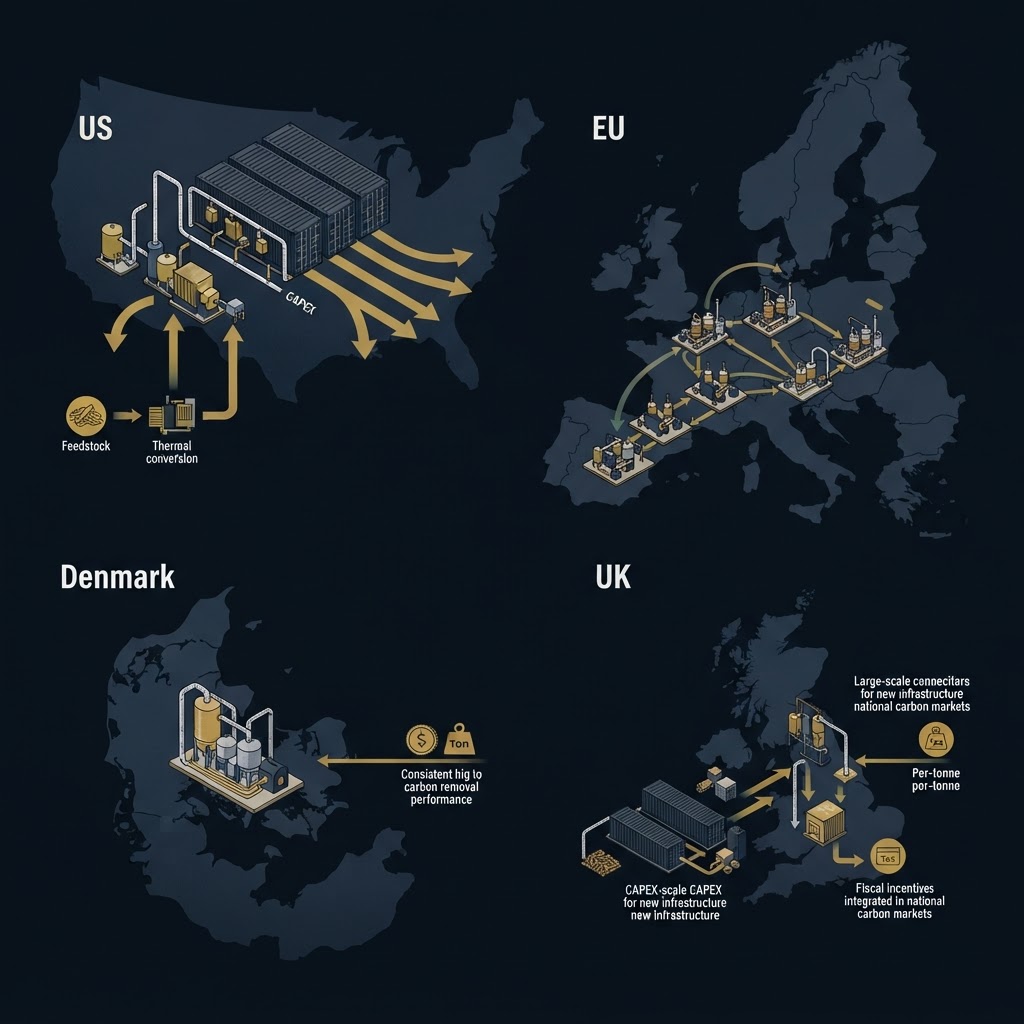
Grants for Biochar Production: US, EU and UK Routes 2026
Grants for biochar production in 2026: USDA and state CAPEX grants, EU LIFE, UK GGR awards and Denmark's DKK 10.2B per-tonne scheme, compared.
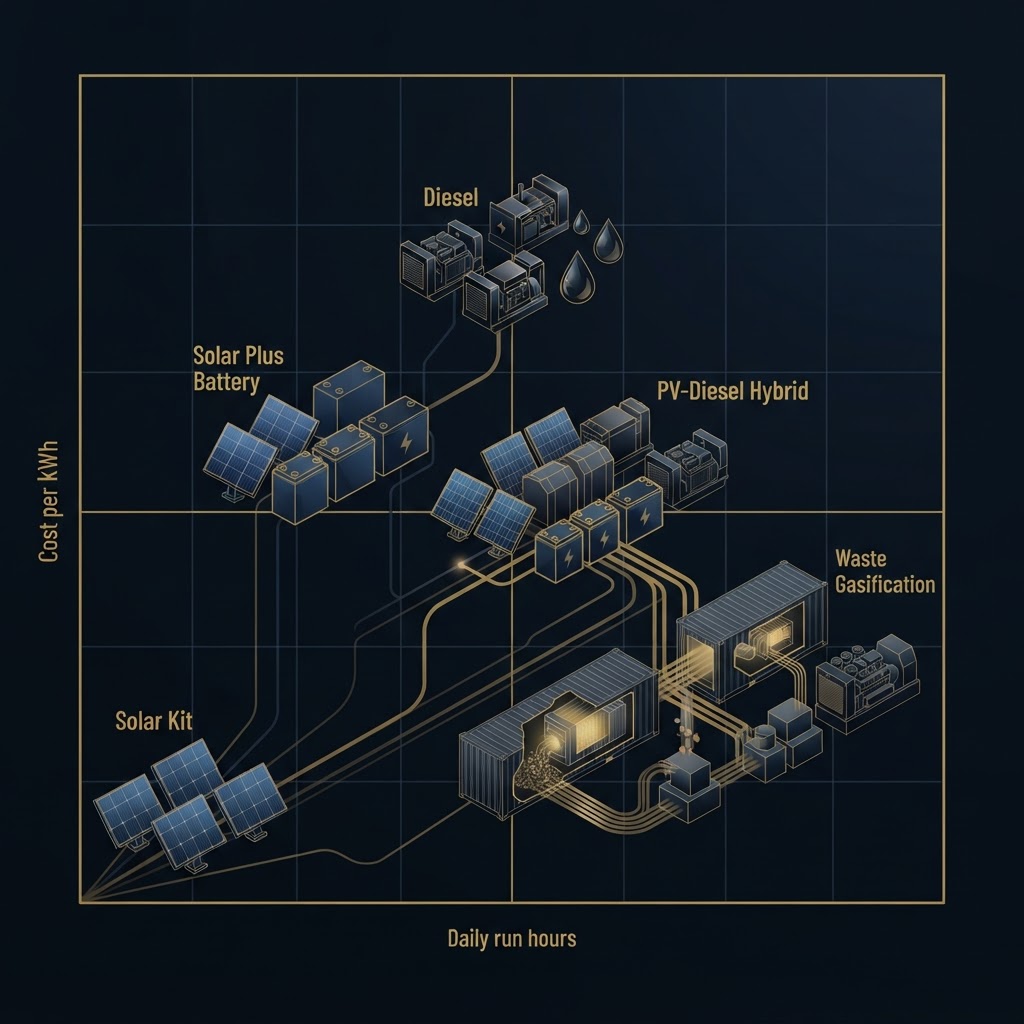
Off Grid Power Solutions: Solar, Diesel, Hybrid or Waste?
Off grid power solutions compared by load and cost per kWh: solar plus batteries, diesel, hybrids and waste gasification for 24/7 power.

ZERO-X — The Tar Problem: Why Most Gasifiers Fail After the Warranty Runs Out
Tar is why small-scale gasification has a graveyard. Zero-X's Verkoso reformer, developed with Fraunhofer IKTS and HSZG, hit 99.98% tar conversion across the 1,939-hour COMETHA campaign at EUR 15-25 per tonne — against EUR 200-400 for wet scrubbing. The next moat: a CeO2 sulfur-tolerant catalyst to eliminate the zinc oxide guard bed.
The Clinker Question: Why the Walzenrost Doesn't Sinter
Fixed grates clinker every 200-500 hours on anything but clean wood because ash fuses below the operating temperature. The X-150's Inconel 625 roller grate shears incipient clinker before it bonds — a 76% reduction in bridging risk, proven across 1,939 hours on MSW digestate, sewage sludge and horse manure.
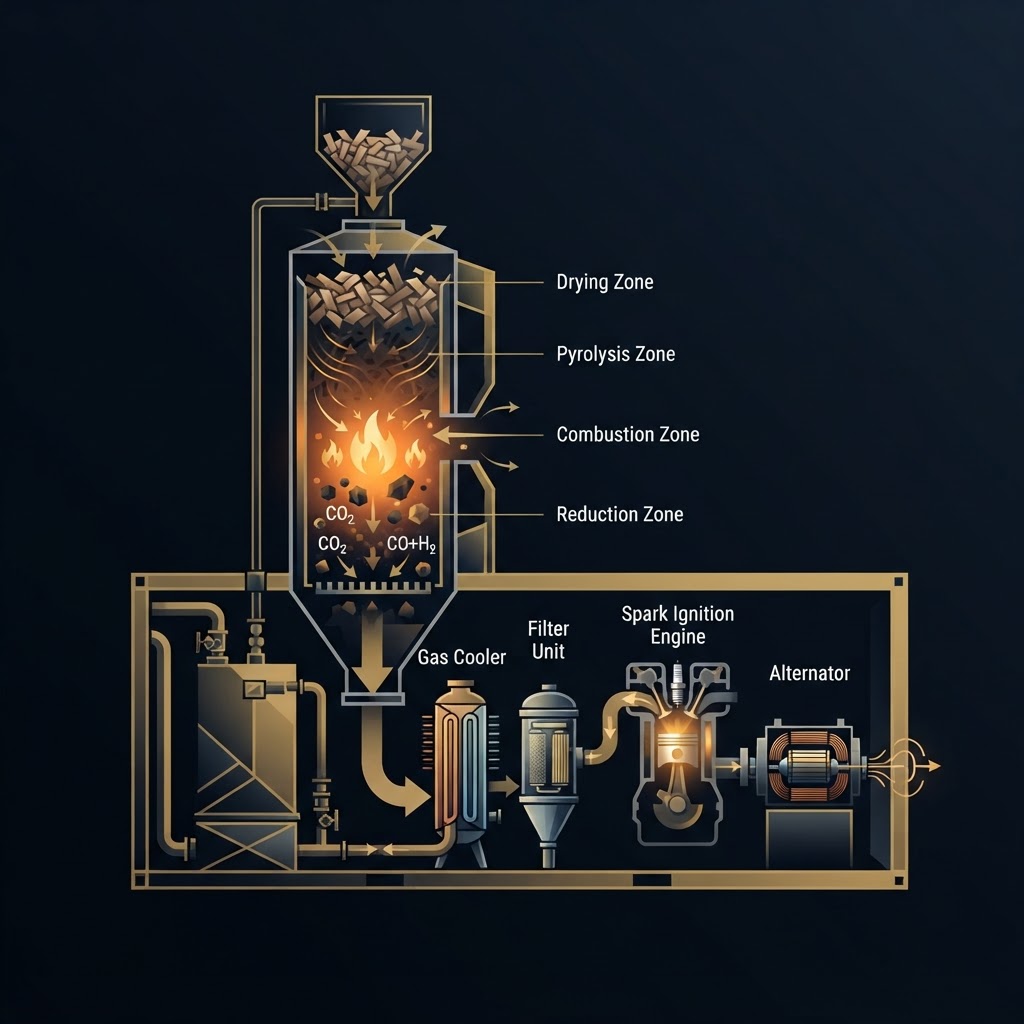
Gasifier Generator: How It Works and What Runs 24/7
A gasifier generator turns wood or waste into engine fuel. Output, fuel use, derating, tar and maintenance, and which class can carry a 24/7 load.
Q3 Close: Where SyngaPure Got To, What Moves Next, and What Is Still Open
An update in three parts: component prototyping started as planned, durability and conversion data are generating, and research partnerships moved from conversation to work packages. Q4 brings real sensor data into the control loop and sorbent work onto the bench. Two honest question marks remain.
Waste-to-Chemicals Has a Translation Problem, Not a Technology Problem
The catalysts, sorbents and control models all exist. What's rare is the person who understands both process chemistry and applied AI well enough to connect them. SyngaPure is built on integration as an engineering decision — one platform, three stages, one AI control layer.
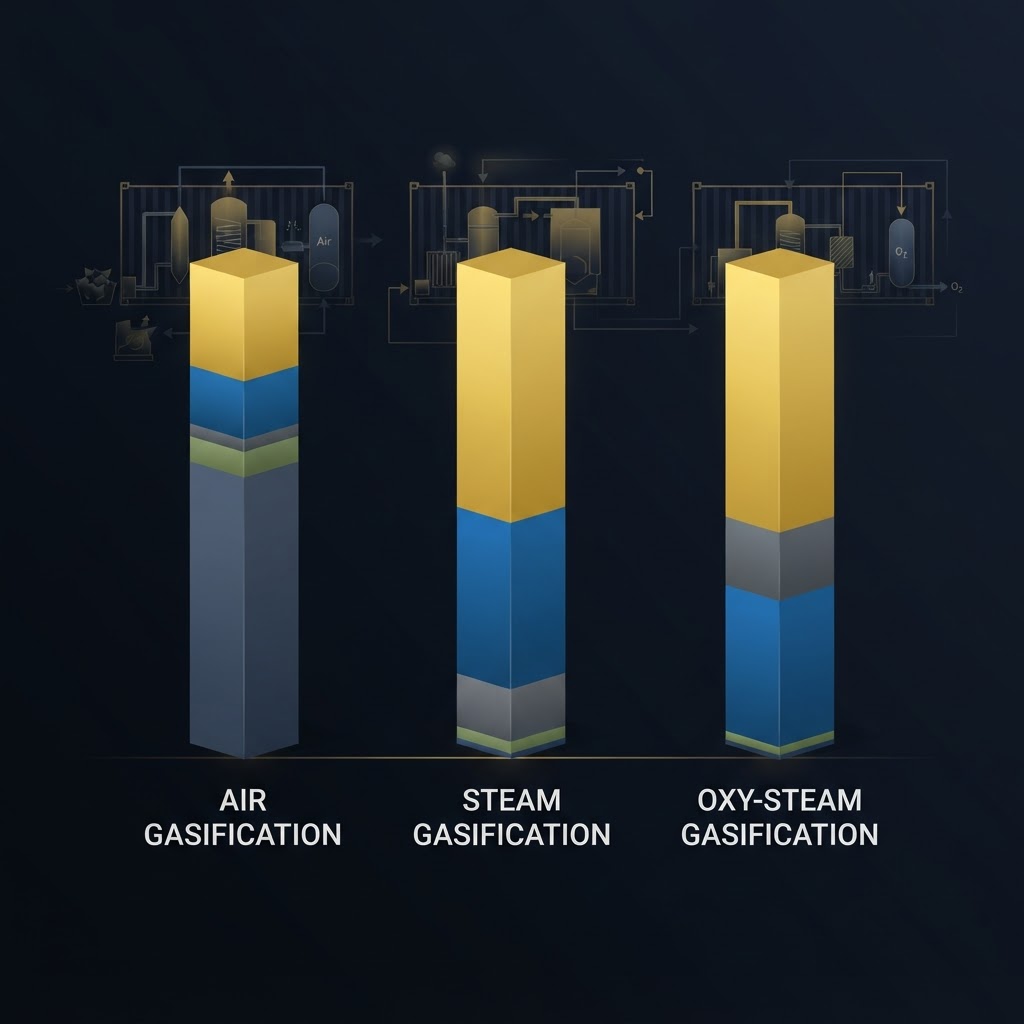
Syngas Composition: H2, CO, CO2, CH4 and N2 by Agent
Typical syngas composition for air, steam and oxy-steam gasification, what moves the H2/CO ratio, and why nitrogen decides what your syngas can become.

Air-Blown for CHP, Oxy-Steam for Fuels: One Machine, Two Pathways
The X-150 is the same hardware whether it runs air or oxygen. Air mode makes power, heat, and cooling for CHP. Oxy-steam mode makes a nitrogen-free, FT-ready syngas for sustainable aviation fuel and methanol. The retrofit is an oxygen supply and steam integration — the gasifier itself is unchanged.
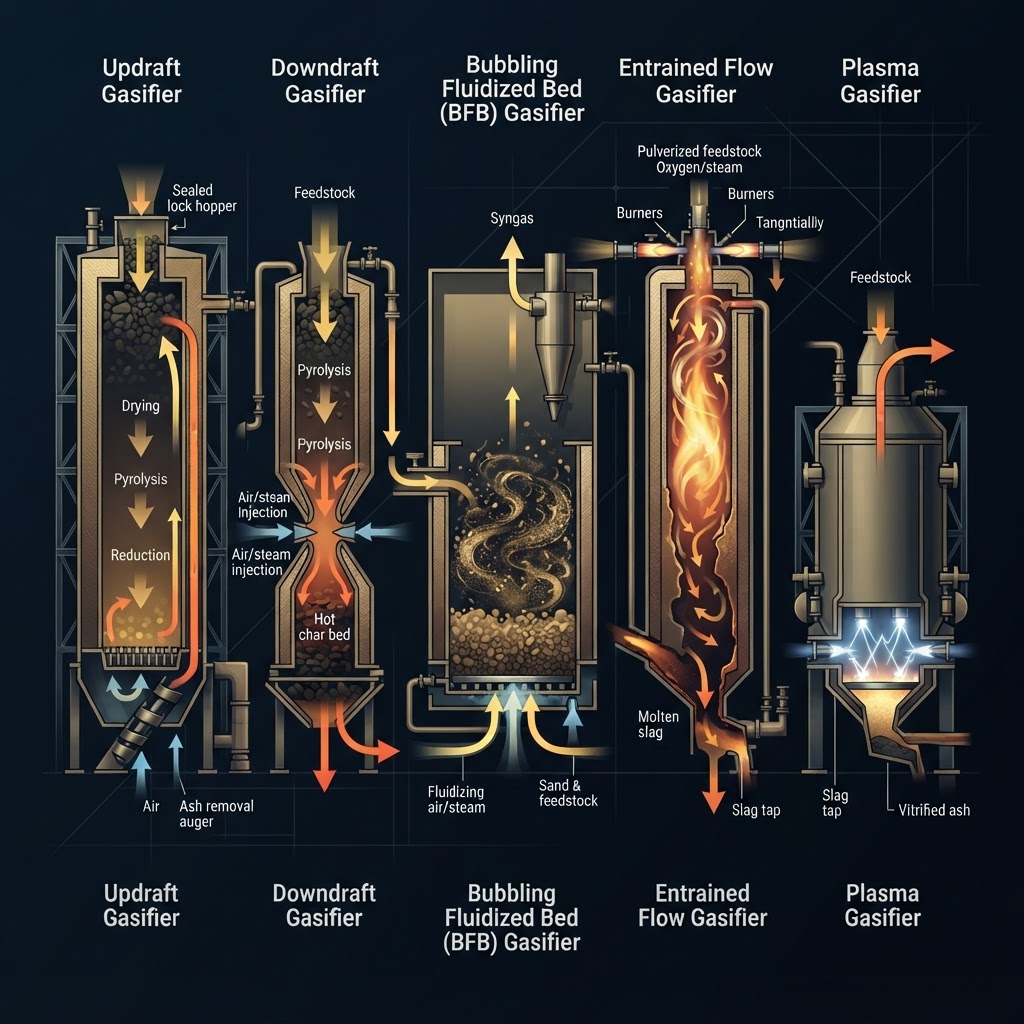
Types of Gasifiers: Which One Survives Real Waste
Types of gasifiers compared: updraft, downdraft, fluidized bed, entrained flow and plasma, with tar loads, temperatures, scale and feedstock limits.
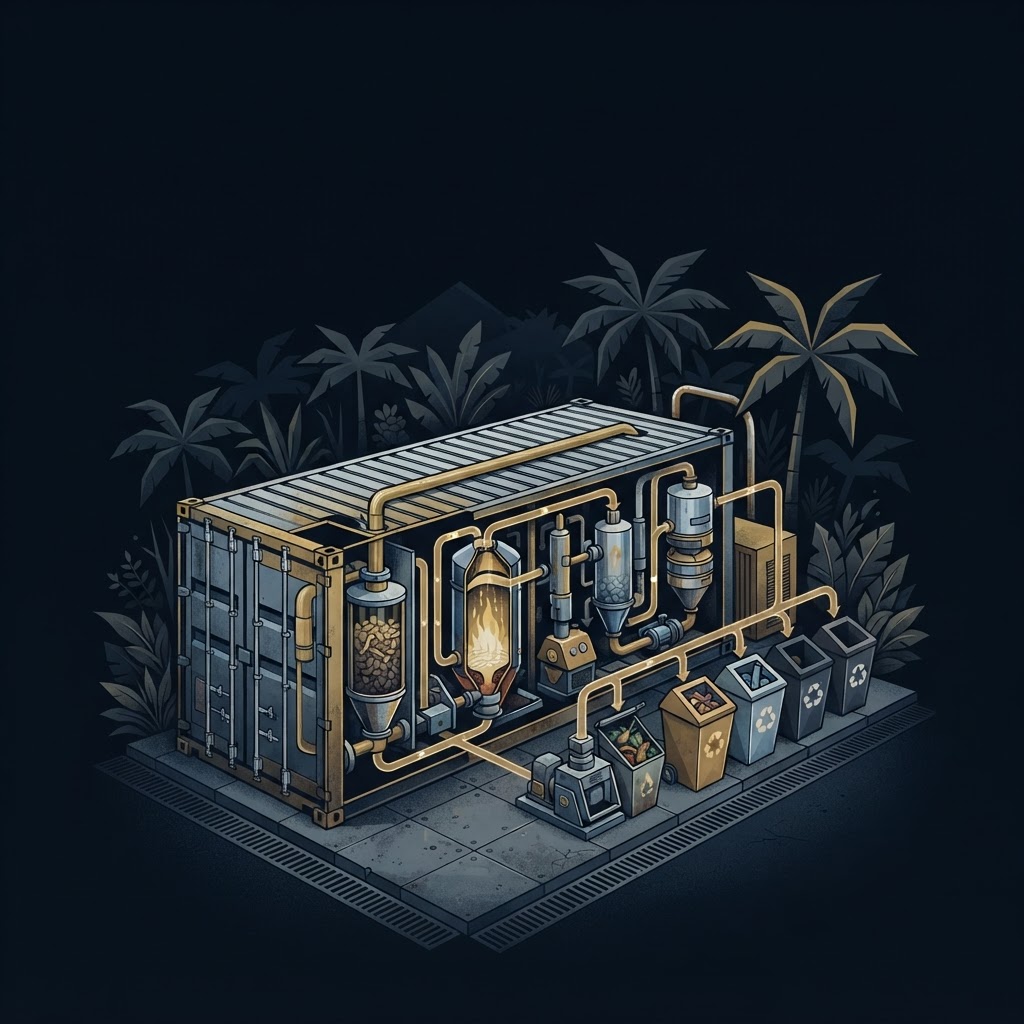
Waste to Energy in Bali: What Hotels Can Do Before 2028
Waste to energy in Bali: what the Danantara plant covers, why hotels still own their organic waste until it runs, and what on-site conversion involves.
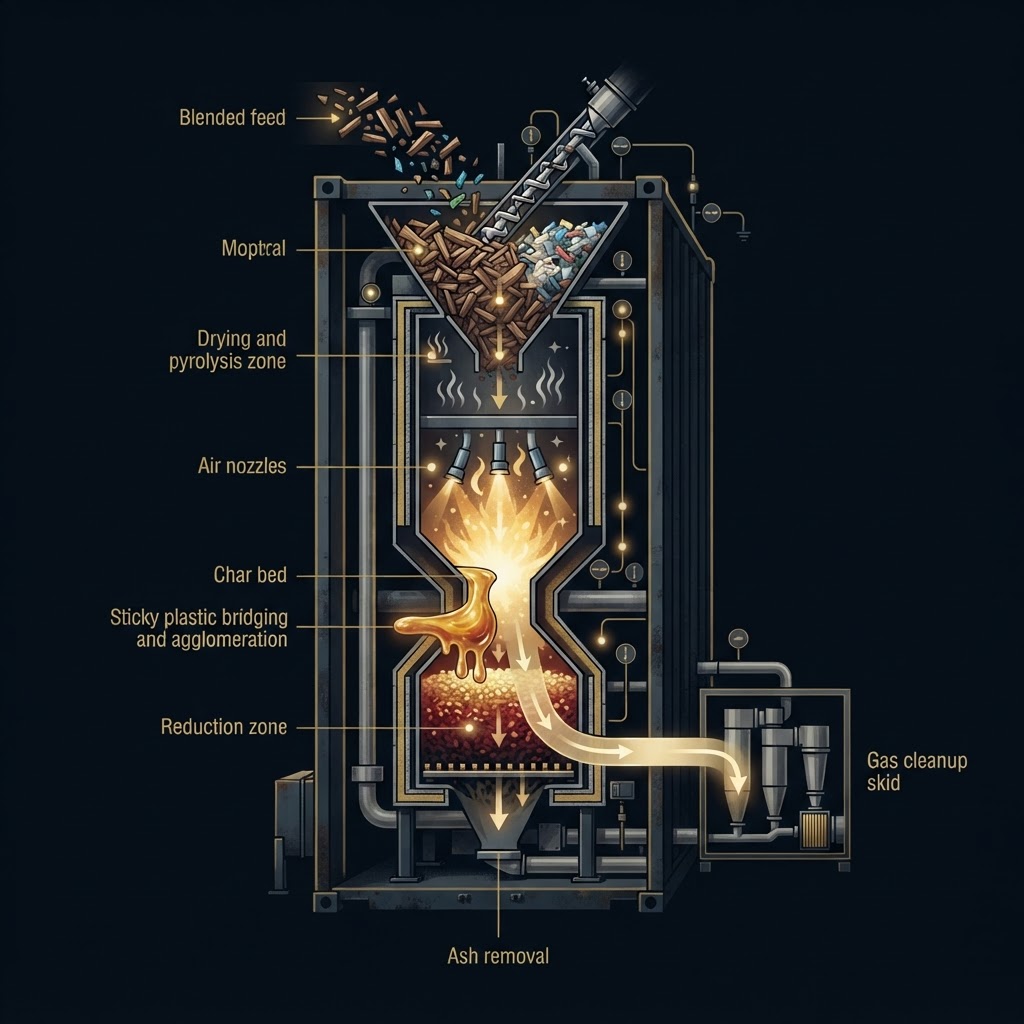
Plastic Waste Gasification: The Feedstock Limits
Plastic waste gasification in practice: why pure plastic melts and tars a fixed bed, what blend share downdraft trials tolerate, and when steam beds win.

Site Engineering: What Actually Goes In the Ground
The X-150 is built to be boring to install — containerized, crane-placed, standard utilities. A reinforced concrete plinth, a 63A three-phase socket, a 50-tonne crane for a day, and 10 to 12 weeks from foundation pour to commercial operation.
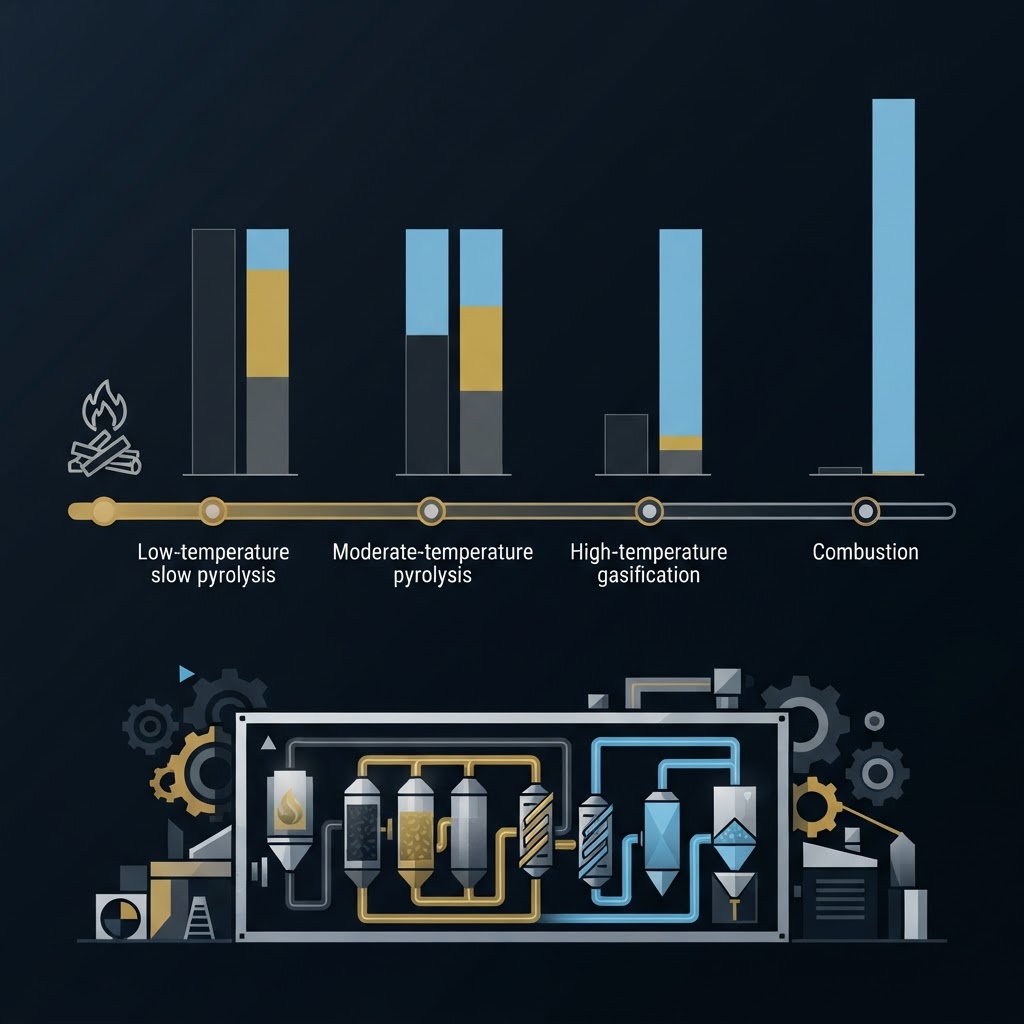
Biochar Production: Process, Yields and Industrial Scale
Biochar production explained: pyrolysis vs gasification, real yields by process, what decides char quality, and how waste-to-energy plants make char.
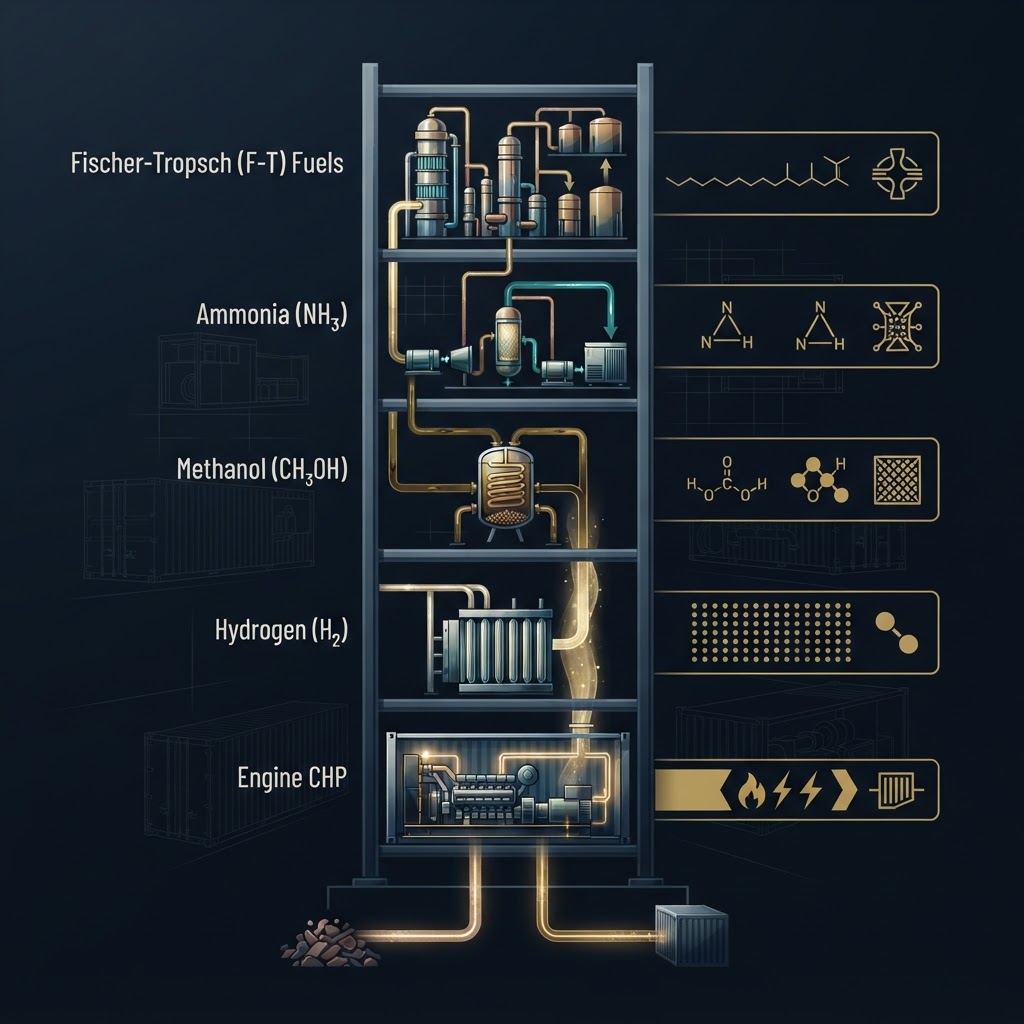
Syngas Applications: Power, Hydrogen, Methanol and FT Fuels
Syngas applications ranked by what they demand: H2/CO ratio, gas cleanliness and scale, from engine CHP to hydrogen, methanol and Fischer-Tropsch fuels.

Two Weeks or Two Years: The Ceramic Grade Decides What Your Gasifier Can Burn
The hottest point in a downdraft gasifier is a replaceable ceramic insert the size of a coffee can. Potassium from agricultural residue fluxes the wrong SiC binder into liquid at 770C — 400C below operating temperature. The same geometry in a binder-free grade lasts twenty times longer, making fuel flexibility a materials decision before it is anything else.
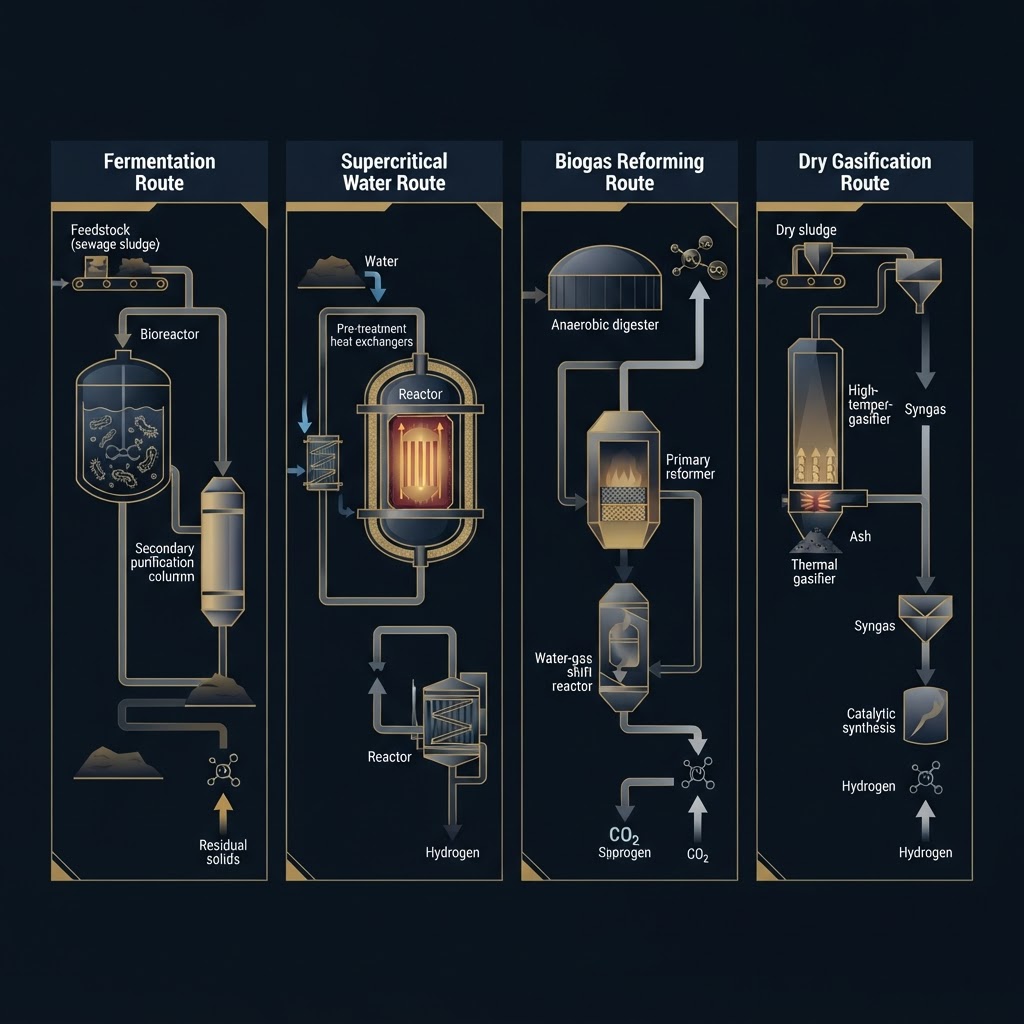
Hydrogen From Sewage Sludge: 4 Routes, Real Numbers
Hydrogen from sewage sludge compared: fermentation, gasification, supercritical water and biogas reforming, with lab yields, plant output and reactor data.
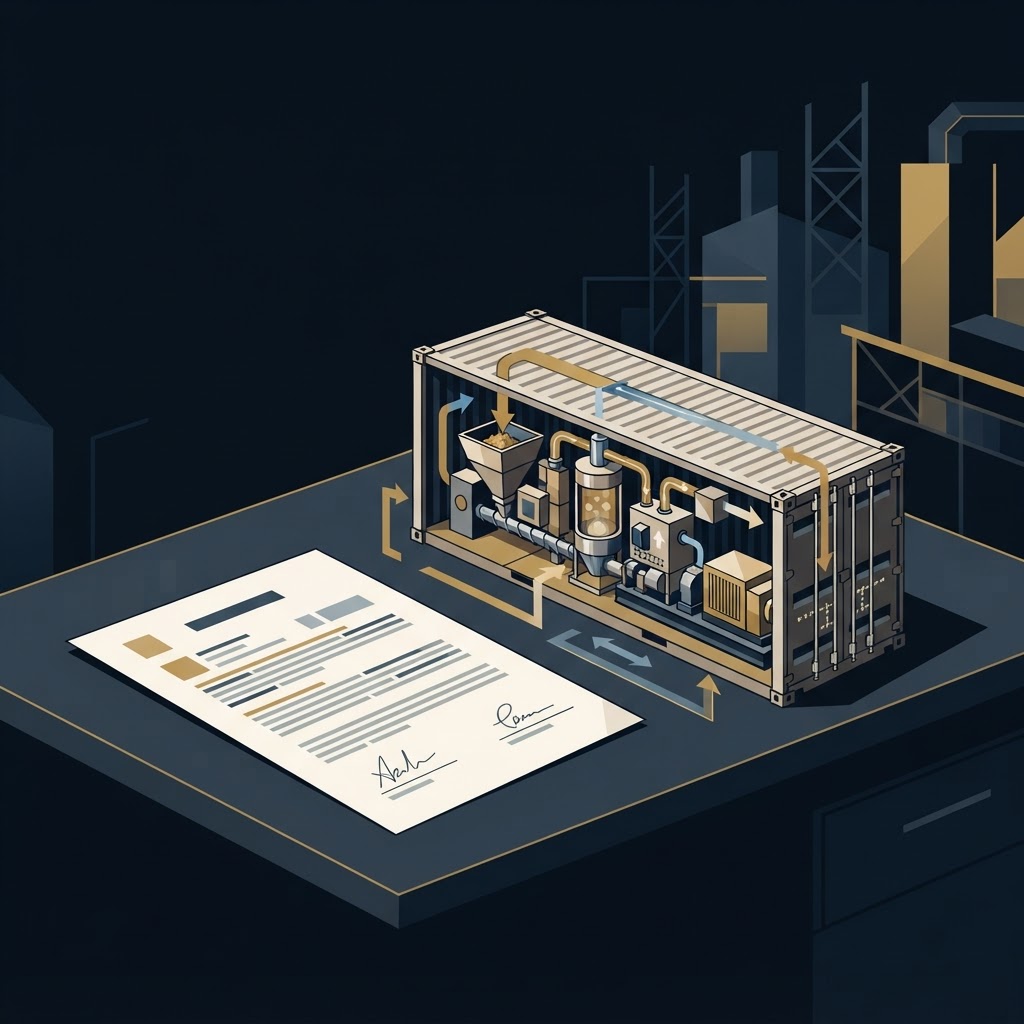
Waste to Energy Technology Licensing: What a Deal Costs
Real gasification license deals, from a $27M fee to 15% lifetime royalties, show what a waste to energy technology license contains and costs.

5 Things SyngaPure Measures Every Second, and Why Each One Matters
You cannot control what you cannot measure in real time. SyngaPure's sensor layer reads five signals every second — tar, H₂S/NH₃, ΔP, bed temperature, and the control model that ties them together — so the cleaning train reacts before the operator has to.
The Field, by the Numbers: X-150 vs. the Small-Scale Competition
A direct, no-spin comparison of the X-150 against Spanner Re2, Volter, and Burkhardt — efficiency, CAPEX, syngas quality, feedstock tolerance, and maintenance. The X-150 wins the moment the fuel stops being clean wood.
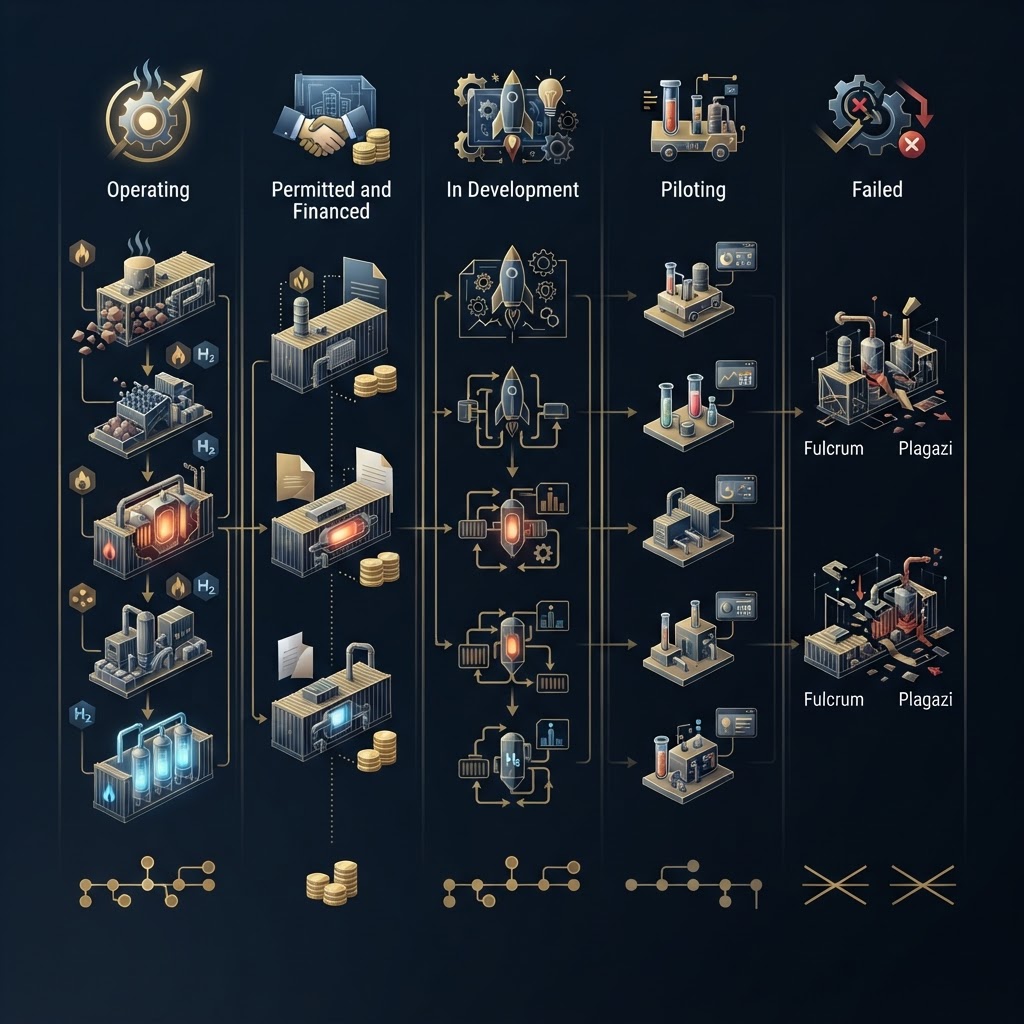
Waste to Hydrogen Companies: Who Is Actually Running
The 2026 field guide to waste to hydrogen companies, sorted by evidence: who is operating, who is only permitted, who went bankrupt, and how to tell.
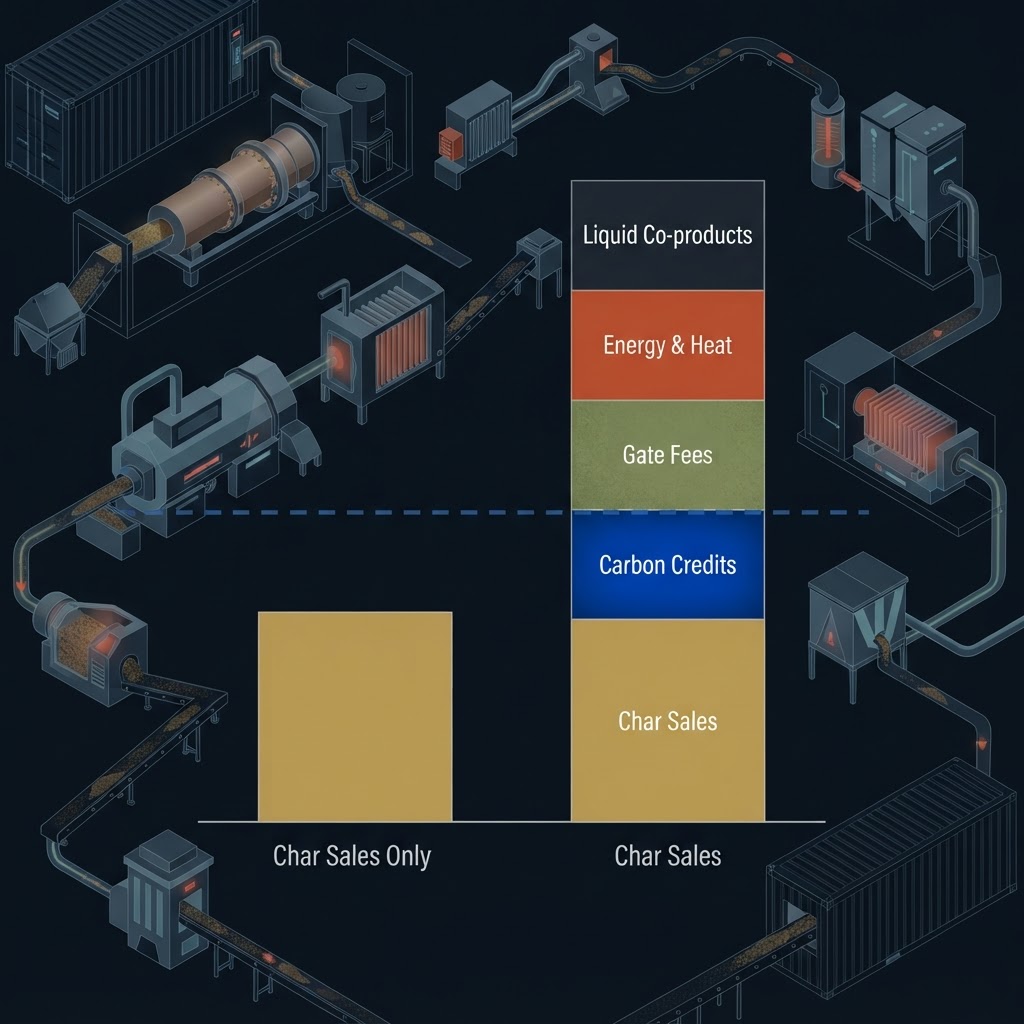
Is Biochar Production Profitable? The Real Revenue Math
Is biochar production profitable? Char sales alone lose money in a 20 year cost-benefit study. The five revenue lines, real 2026 prices and what fixes it.
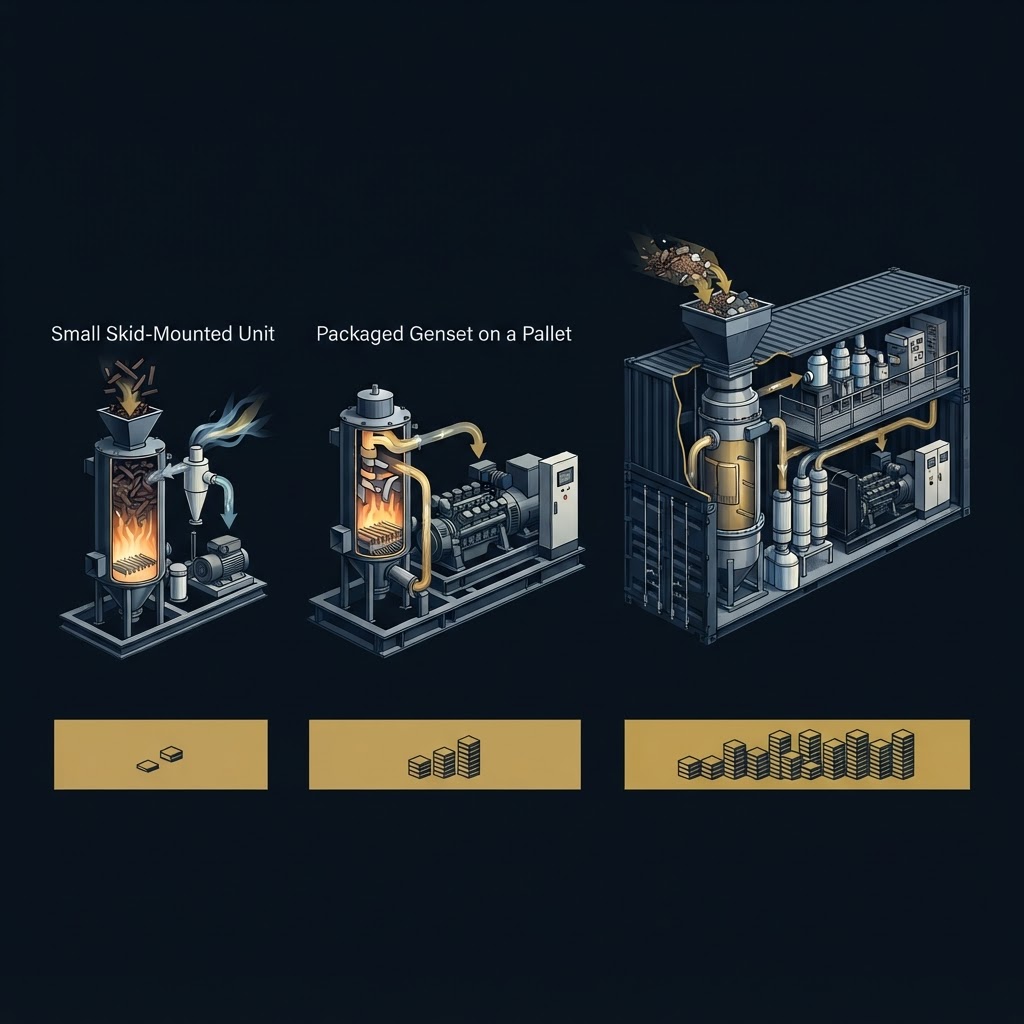
Small Biomass Gasifier Price: What Each Tier Buys
Small biomass gasifier prices run from $1,000 kits to containerized waste systems. What each tier includes, cost per kW, and the net price after grants.

Why Zero-X Doesn't Sell the Machine
The gasification industry is full of companies that built excellent machines and died anyway. Zero-X's business model is built around what the machine produces — kilowatt-hours, heat, and compliance contracts — not one-time equipment sales.
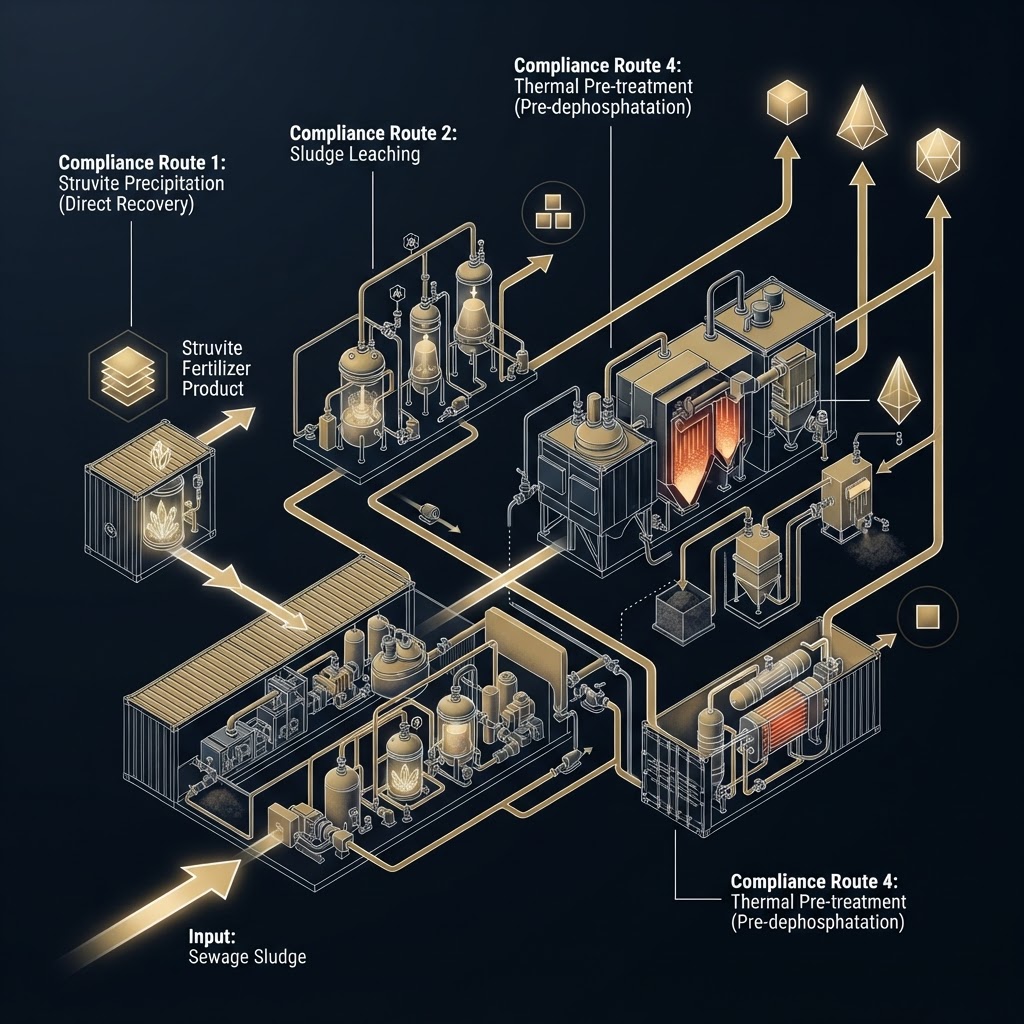
Phosphorus Recovery From Sewage Sludge: 2029 Options
Phosphorus recovery from sewage sludge is mandatory in Germany from 2029. The four compliance routes, their real recovery rates and what each one costs.
NO REBUILD: WHY SYNGAPURE WAS DESIGNED TO RETROFIT THE GASIFIER YOU ALREADY RUN
SyngaPure is a modular syngas cleaning platform built to sit downstream of an existing gasifier. Retrofit, not greenfield, is how good cleaning actually gets installed.
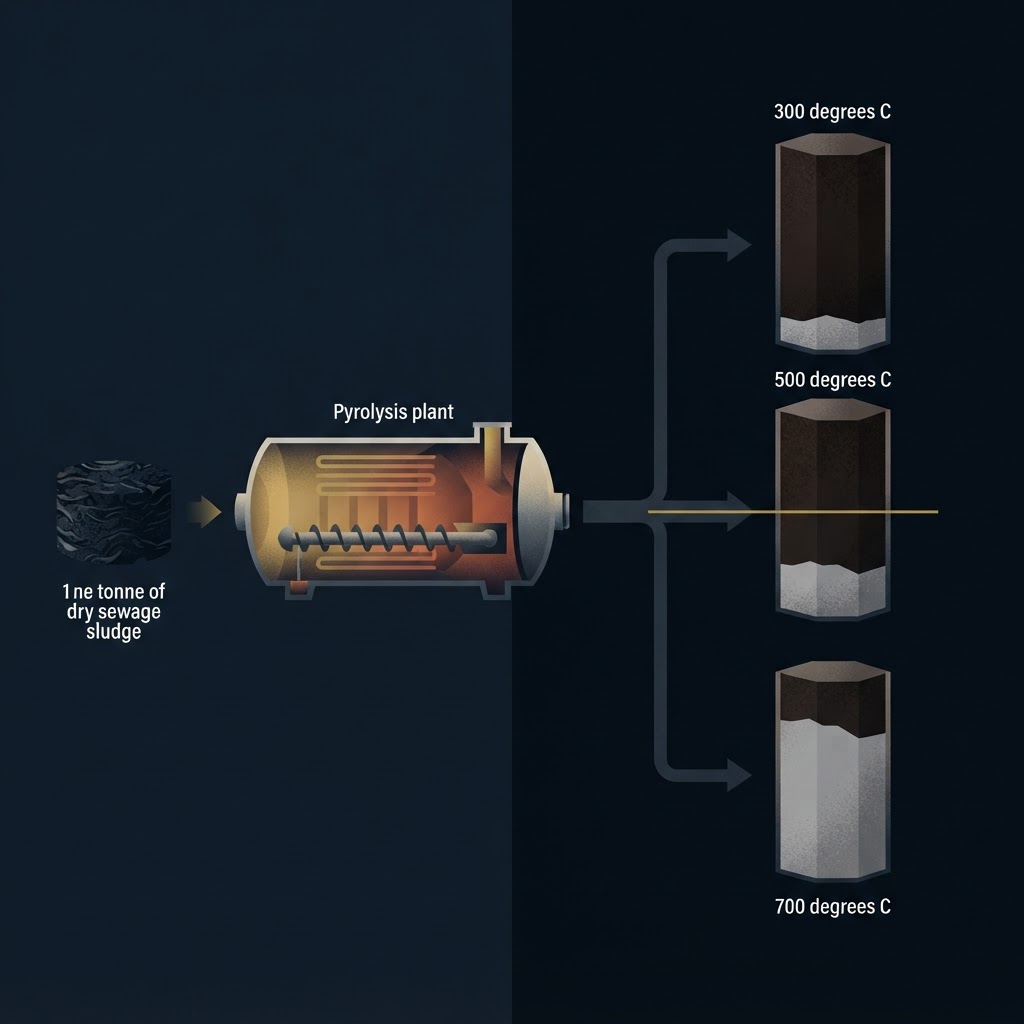
Biochar From Sewage Sludge: Yield, Metals and the Law
Biochar production from sewage sludge: real char yields, ash and metal numbers, why most of it is not EBC biochar, and what AbfKlaerV lets you do.
Ash Is Not the Problem. The Grate Is the Solution.
For decades, ash has been the quiet killer of biomass gasification. The X-150's Walzenrost roller grate turns ash from a failure mode into a controlled output stream — and changes which fuels an operator can actually use.
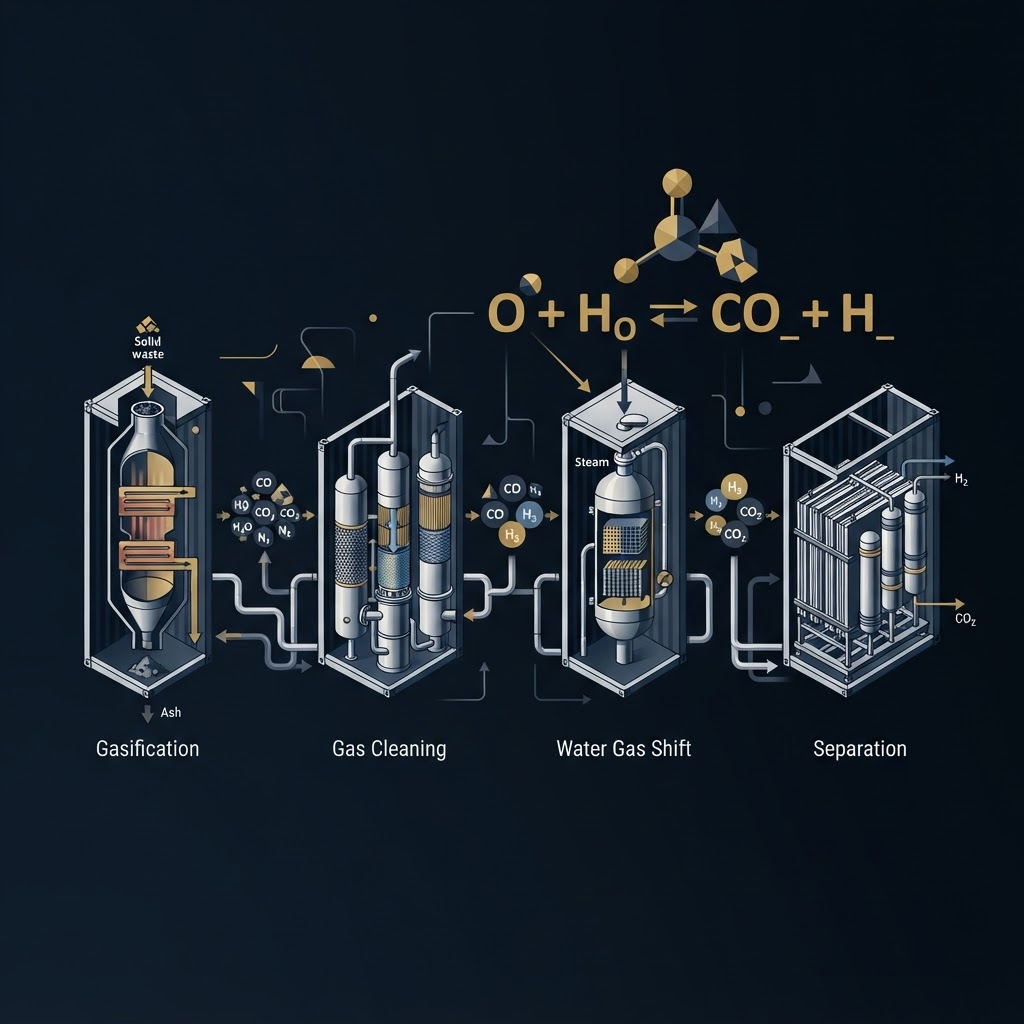
How Does Waste to Hydrogen Work? The Four Stages
How does waste to hydrogen work? The four stage chain from gasifier to fuel cell grade gas: the reactions, the temperatures, and what breaks at each step.

ASH MELTS. THE GRATE MOVES. 2,500 HOURS, NO REBUILD.
The X-150's Walzenrost roller grate rotates beneath the fuel bed, shearing agglomerates and discharging ash continuously. 2,500+ validated hours, zero clinkering events, no gasifier rebuild — on the high-ash feedstocks that glue fixed-grate machines shut.
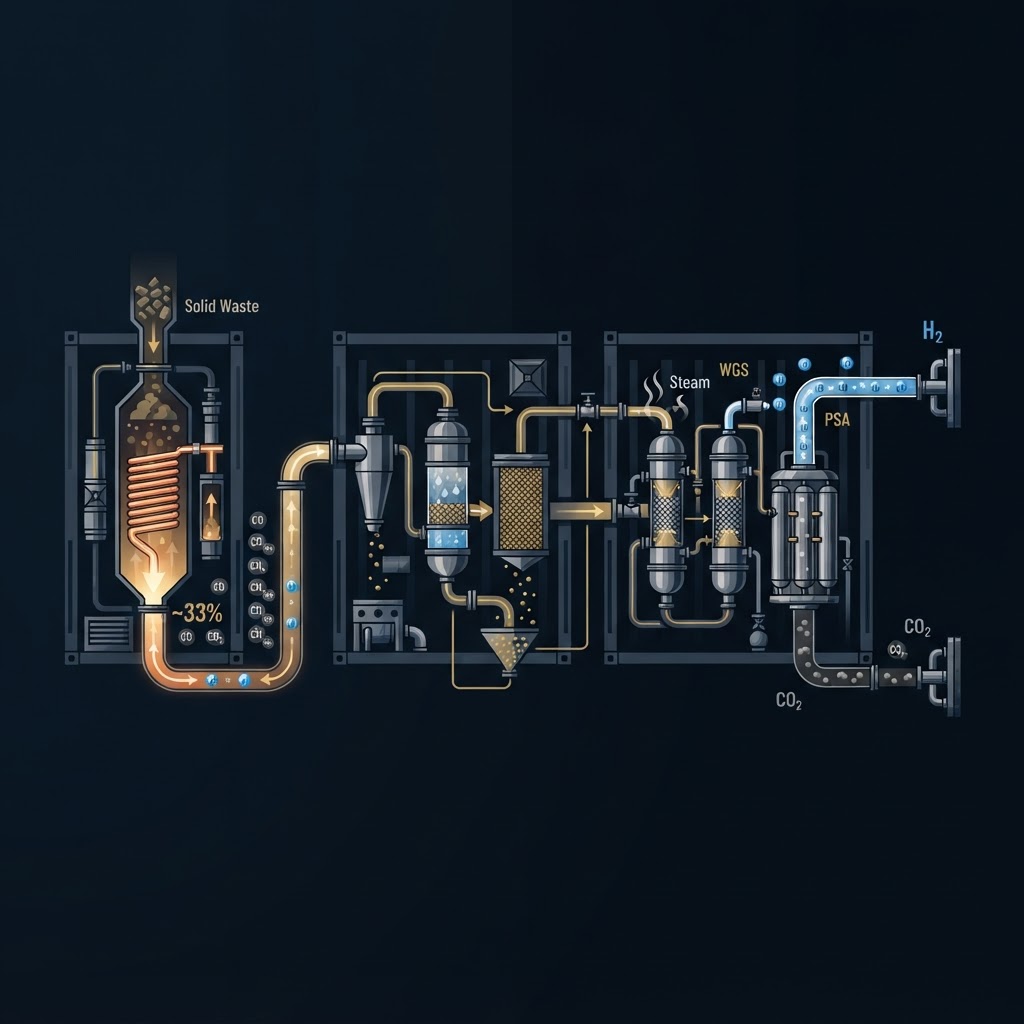
Waste to Hydrogen: What the Gas Actually Contains
Waste to hydrogen explained by an operator: the gasify-shift-separate chain, real H2 yields, 1,939 hours of measured data, and what a kilogram costs.
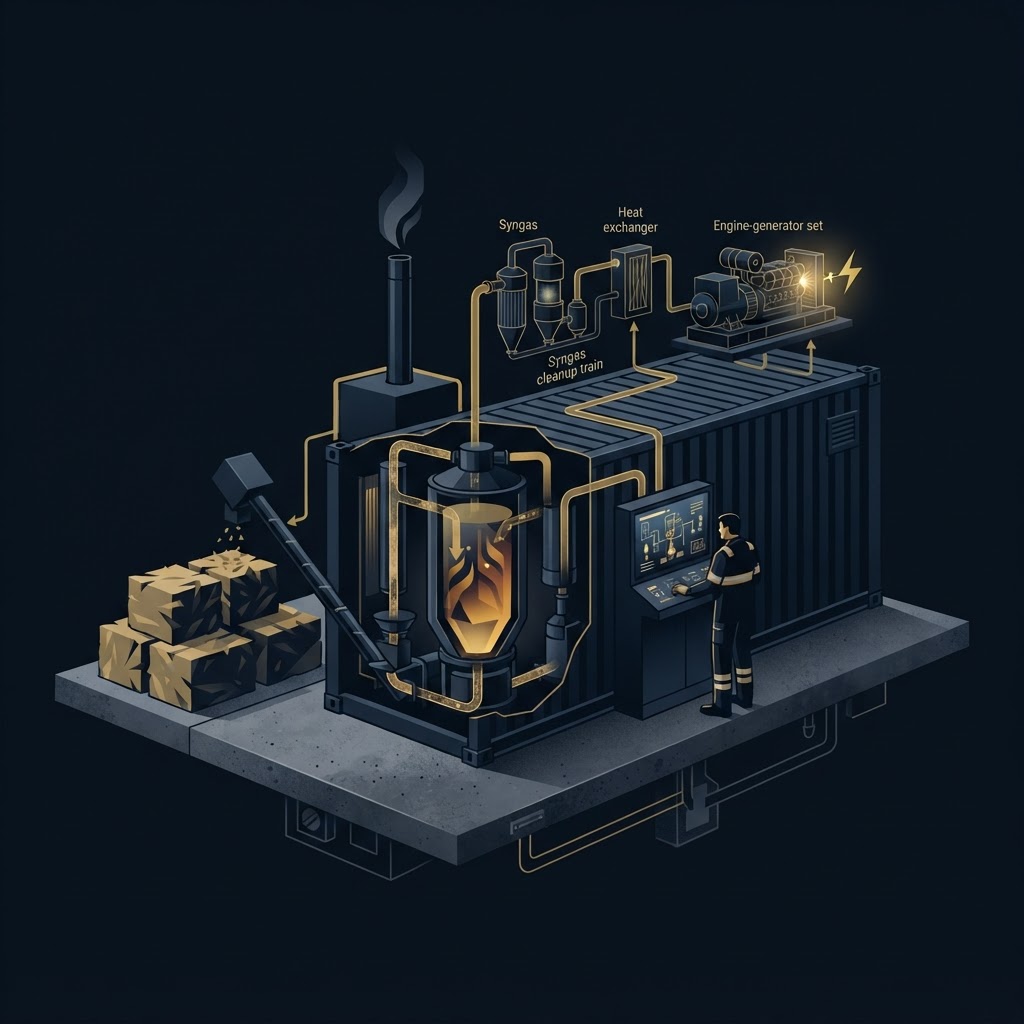
What Does a Waste to Energy Plant Cost? 2026 Numbers
How much does it cost to build a waste to energy plant? Sourced CAPEX at city scale, the small-scale numbers nobody publishes, and the grant math.

Feedstock Is the Hard Part. That's Why We're in Australia.
The reactor is the easy part — the hard part is the feedstock. Inside the ARC Research Hub at Monash University, where Zero-X's X-150 and Verkoso tar reformer meet Australia's tyre, crop residue and food waste.
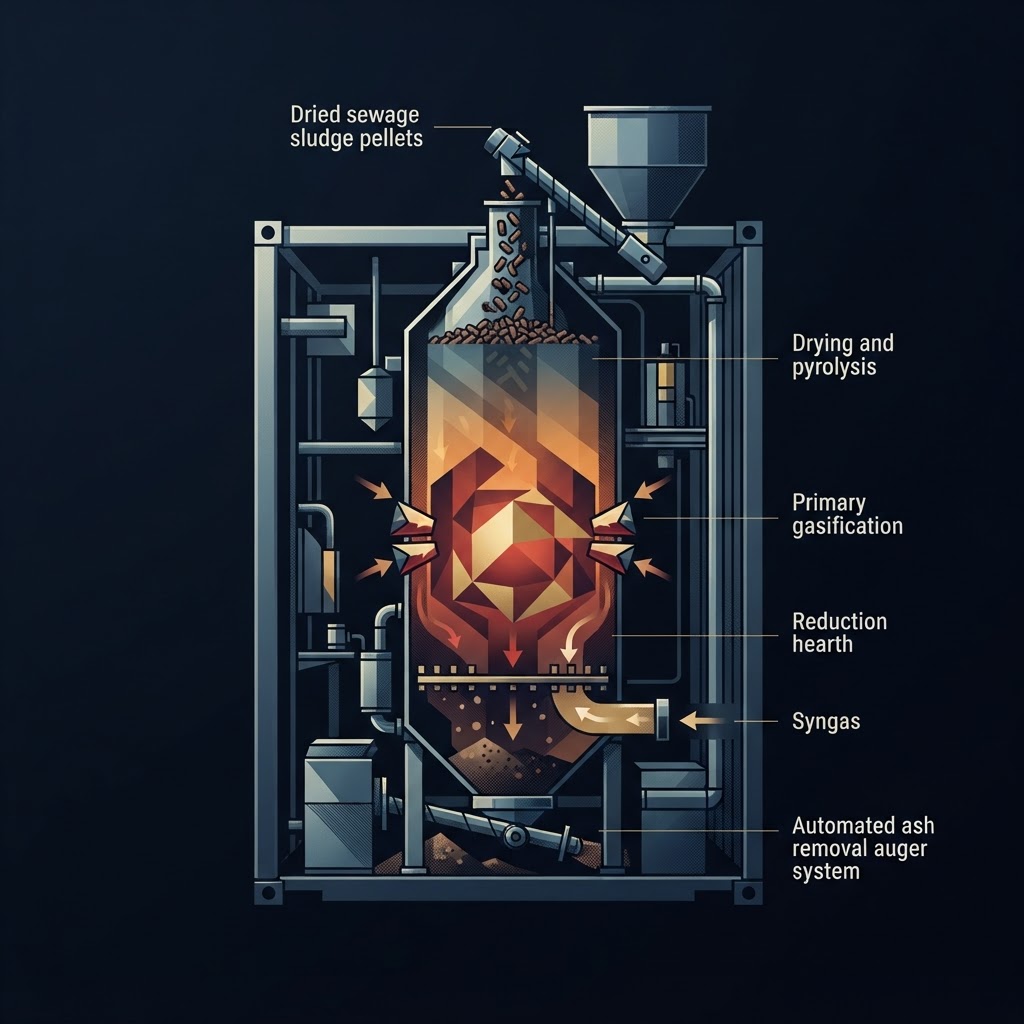
Sewage Sludge Gasification: What Actually Works
Sewage sludge gasification for operators: why high ash and bed sintering kill gasifiers, what AbfKlaerV requires by 2029, and which plants really run.

Why Nobody Runs a Gasifier on Sewage Sludge — and the Two Decisions That Changed It
Small-scale gasification has been stuck on wood chips for twenty years because the feedstocks the world actually has — sludge, digestate, palm residues — kill conventional machines. The X-150's rotating roller grate and oxy-steam gasification are the two decisions that fixed that.
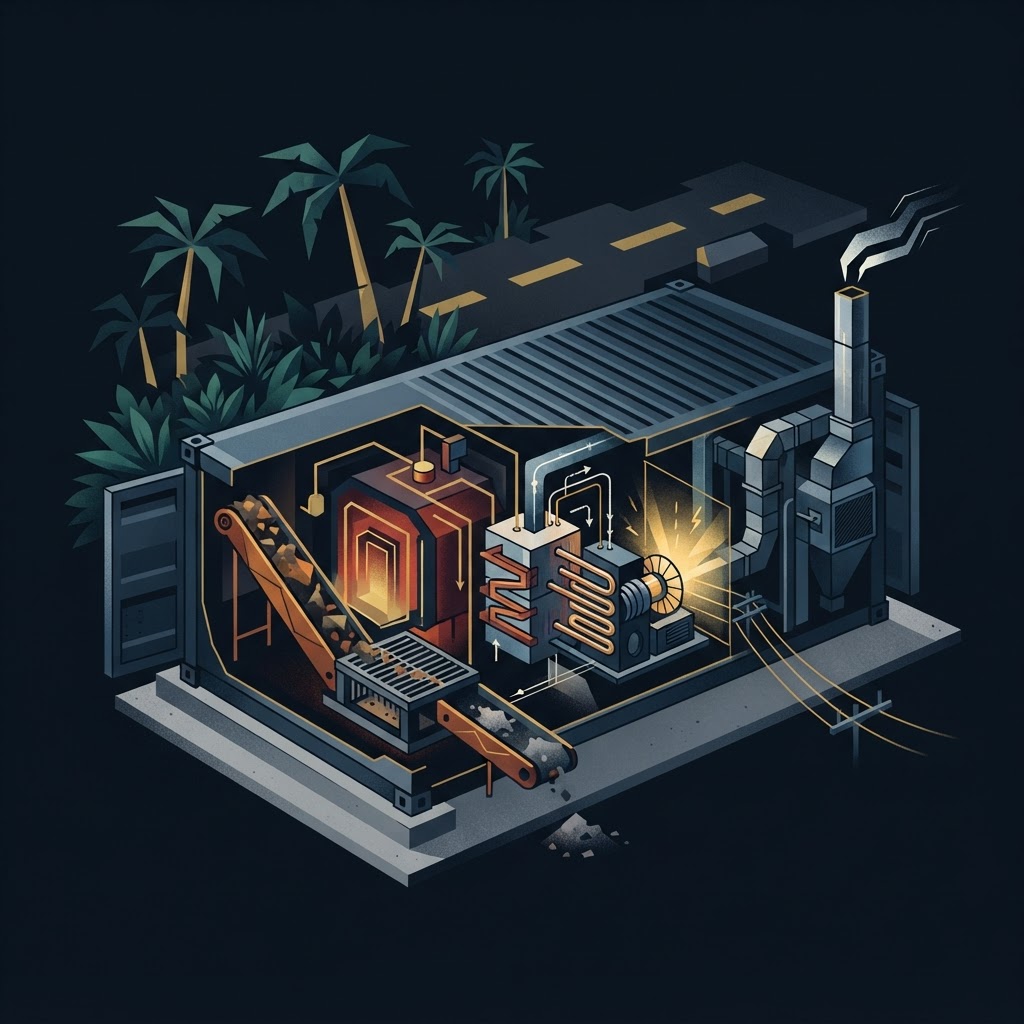
Waste to Energy for Hotels and Resorts: What Actually Works
Waste to energy for hotels and resorts: why biodigesters reach only a third of the bin, what thermal conversion adds, and the numbers that decide payback.

From Fukushima Dust to Biofuels — The Radionuclide Capture Patent
Japan has 13 million cubic meters of cesium-contaminated soil with nowhere to go. Zero-X holds the only patented method that gasifies it, captures Cs-137 inside the char bed, and produces hydrogen-rich syngas — founded on research the Zero-X inventor co-authored at Fukushima University.

X-150 Heads to First Commercial Sites — and the Paris Data That Got It There
First commercial X-150 units are shipping to reference projects in Portugal and Spain. The machine that ships is not the one that started the Paris campaign — the COMETHA operating ledger is now the sales document.
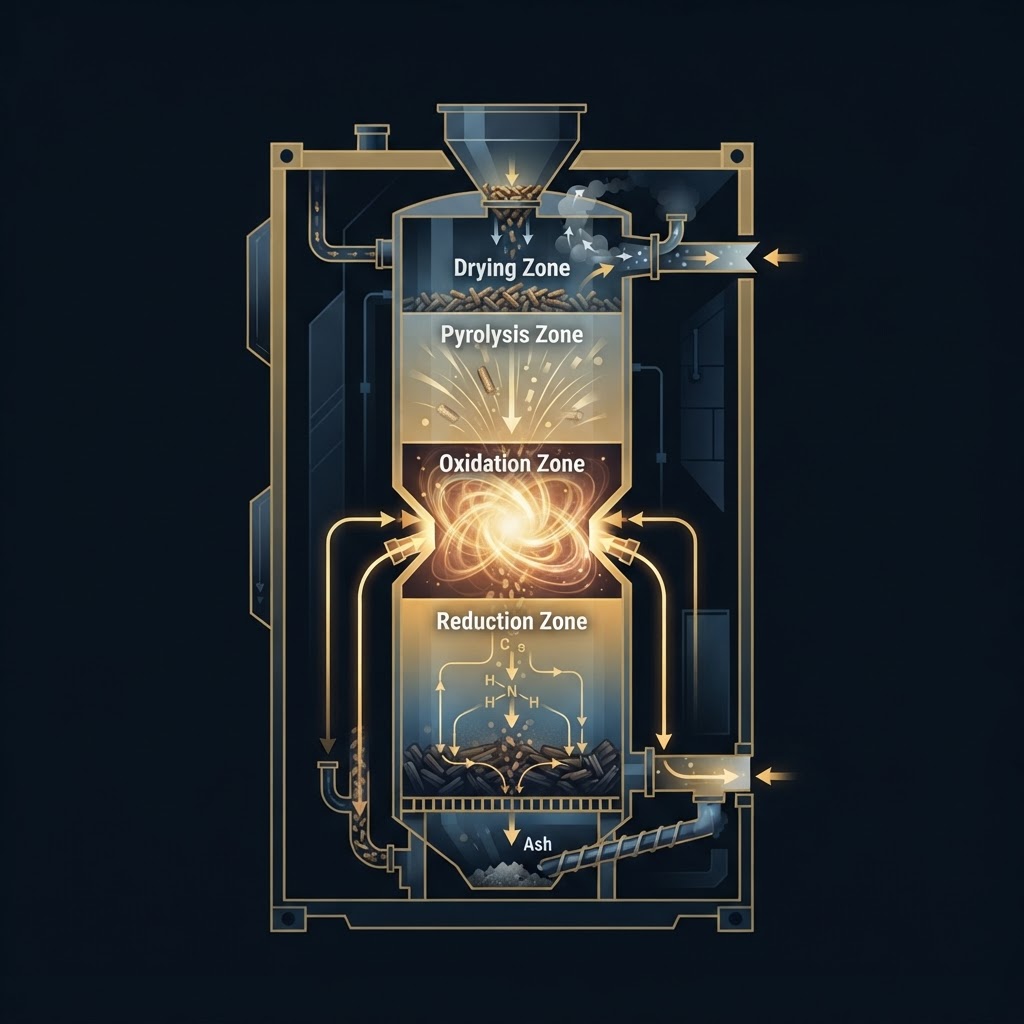
How Does Waste Gasification Work? Step by Step
How does waste gasification work? A stage by stage walkthrough: drying, pyrolysis, oxidation, reduction, the ratio that controls it, and why plants fail.

Where Does Your Plant Lose the Most Hours?
Every operator gives a different answer, and the pattern is telling: the gasifier is rarely the bottleneck. The gas cleaning train is where hours disappear, every time the feedstock changes. SyngaPure is designed around exactly that failure profile.
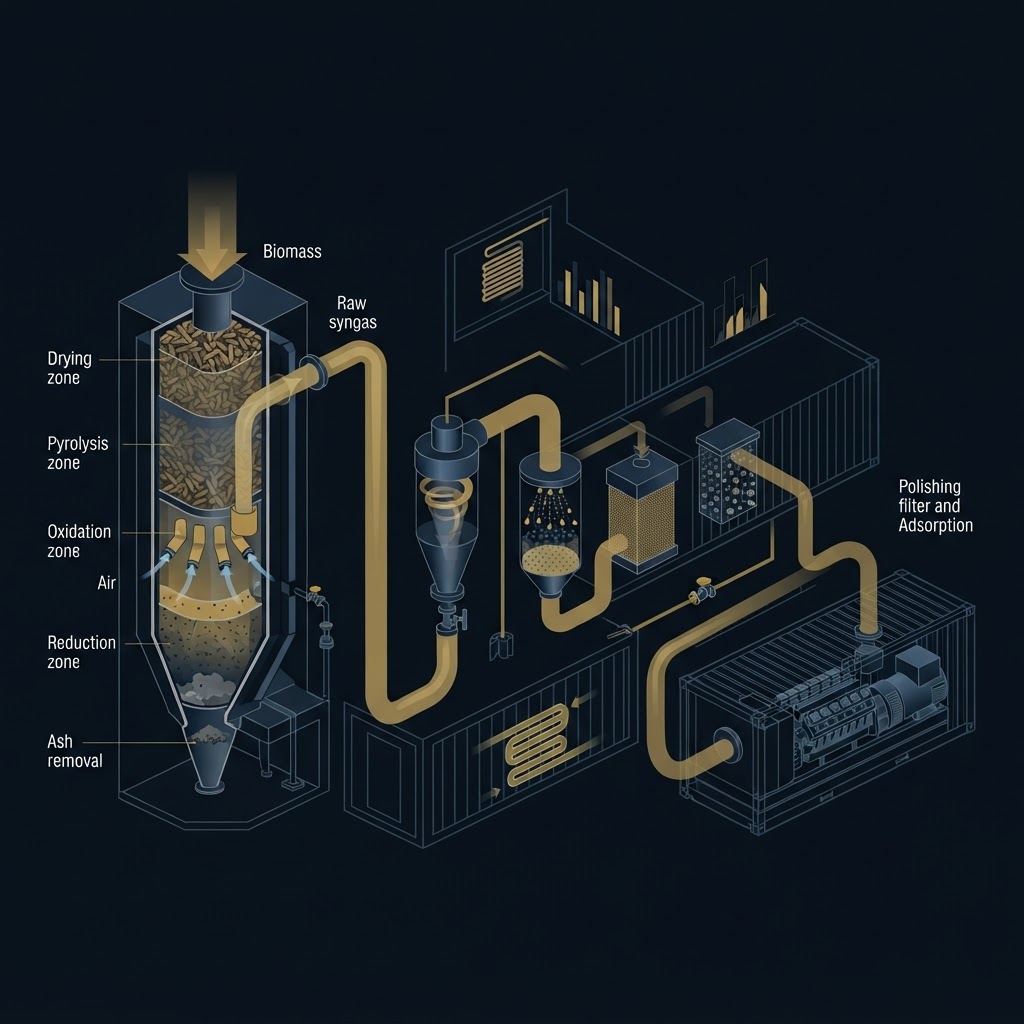
Tar Removal From Syngas: What 99.98% Conversion Takes
Tar removal from syngas in real numbers: raw gas up to 150 g/m3, engines need 0.01 g/m3, and what holding 99.98% conversion for 1,939 hours takes.

What a Tar Reformer Has to Prove Before It Leaves the Bench
Q3 component prototyping for SyngaPure built around a single bar: hold outlet tar under 10 mg/Nm3 while the feedstock composition moves underneath the system. Four measurements define the program, each one existing because a plant died without it.
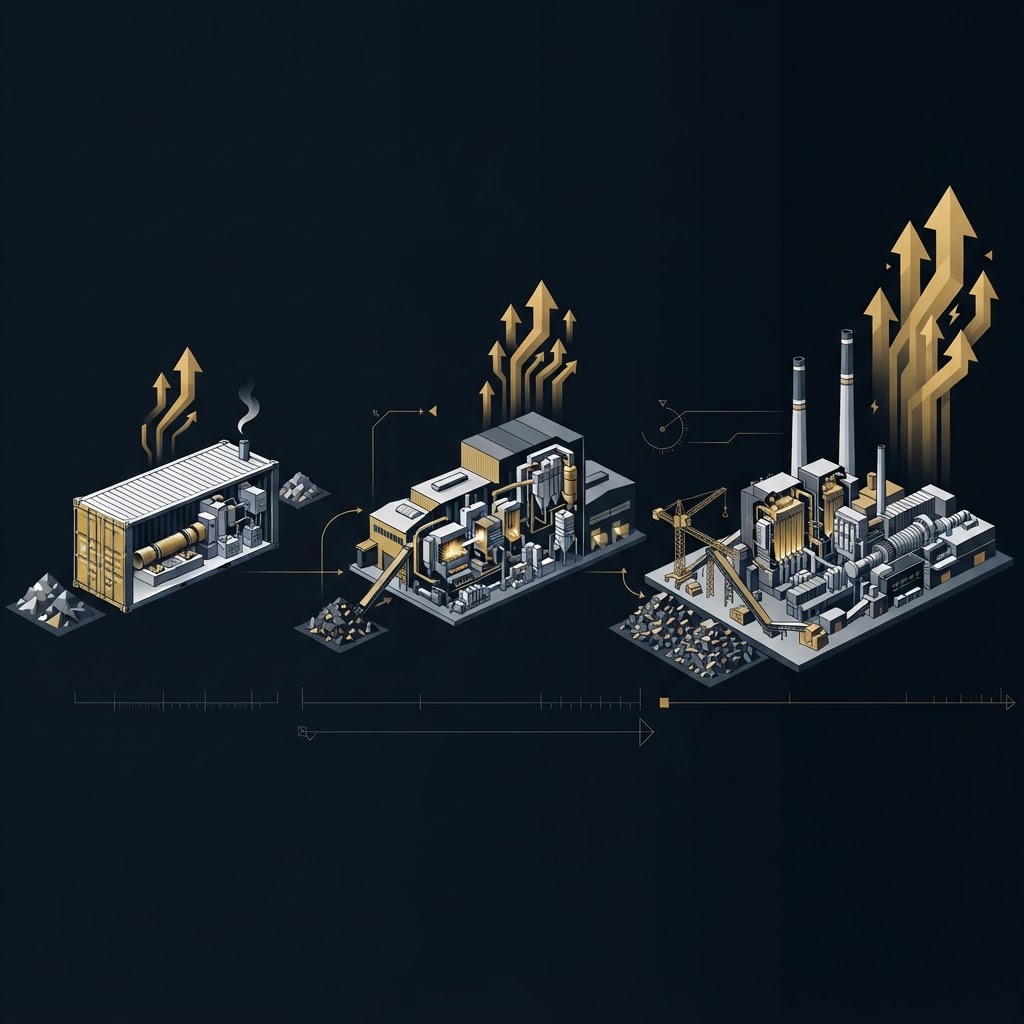
Small Scale Waste to Energy Systems: A Buyer's Guide
Small scale waste to energy systems compared: capacity classes, what each technology actually eats, and the operating-hours number that decides payback.

Under 10 mg/Nm3, Repeatedly: Why SyngaPure Started With the Tar Reformer
Q3 component prototyping is underway, and the first component on the bench is the catalytic tar reformer — because tar is where waste-to-chemicals projects die in the field, not in the lab. The success bar is staying under 10 mg/Nm3 while the feedstock composition moves underneath the system.
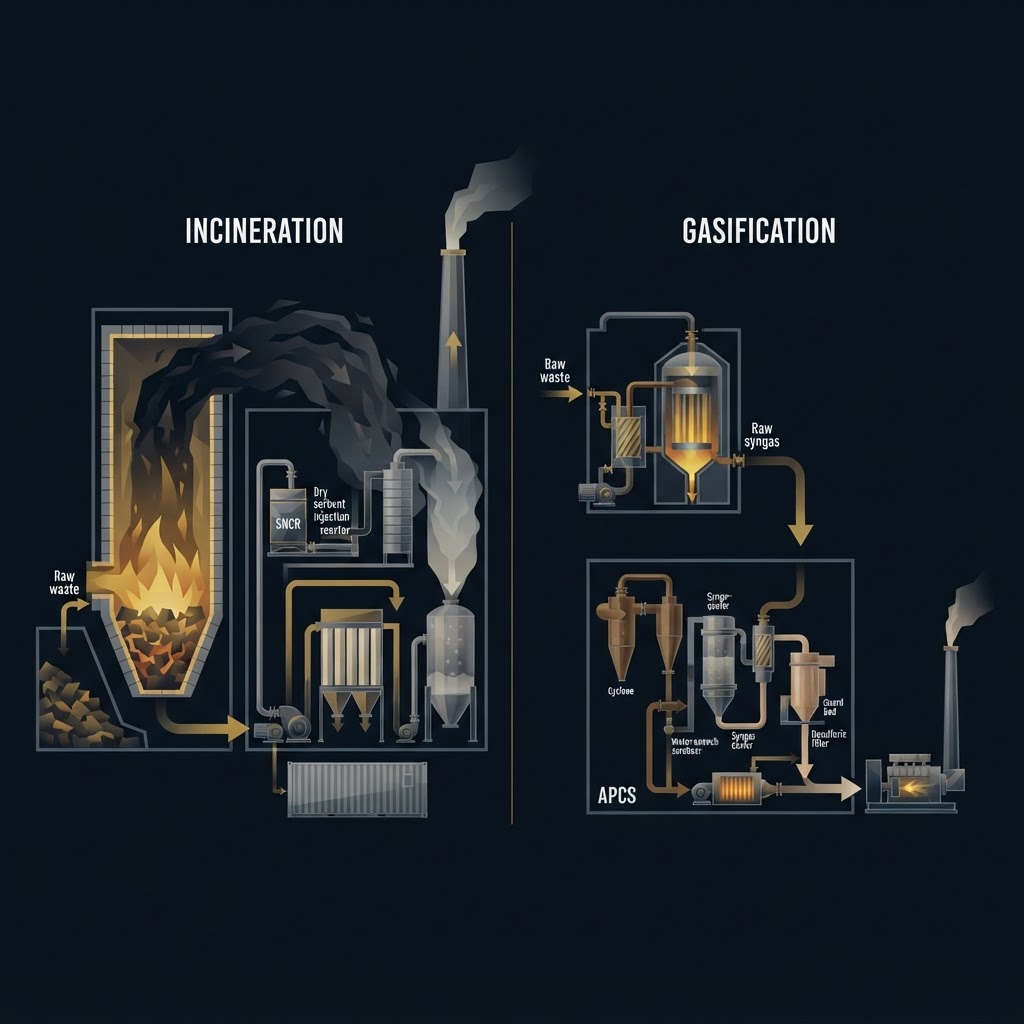
Gasification vs Incineration: What the Data Actually Says
Gasification vs incineration on efficiency, dioxins, ash and track record, including the cases where each one is genuinely the right answer.
Government Grants for Waste to Energy: The Real Routes
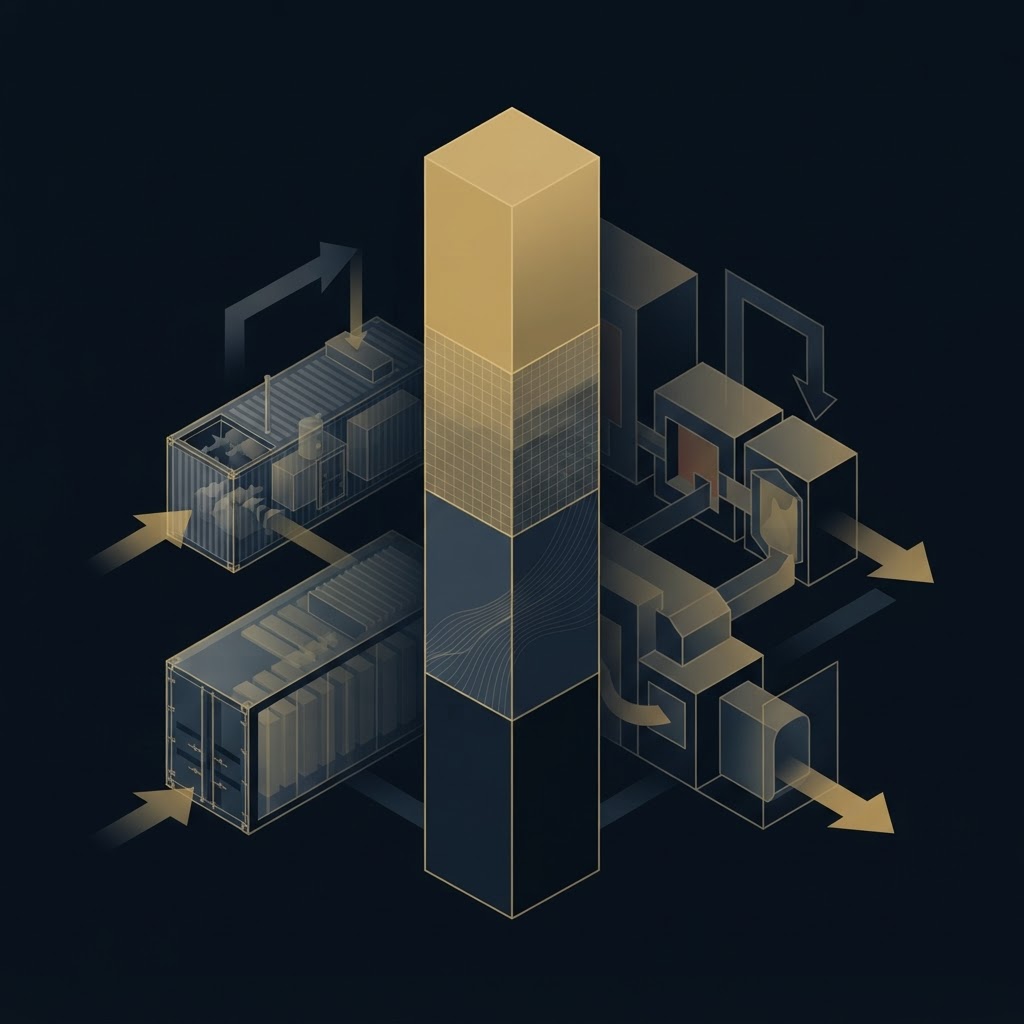
Government grants for waste to energy: EU Innovation Fund rates, state aid ceilings, and the national routes that fund 56 to 70 percent of CAPEX.

Three Filters. A Ten-Year Platform. How We Choose SyngaPure Partners.
Since the BMWK go-inno announcement, the SyngaPure inbox has been full. We partner with teams that have spent years inside one of its technical layers, have already hit its failure modes, and think in years, not quarters.
Biochar Production Equipment: Kilns vs Continuous Gasifiers
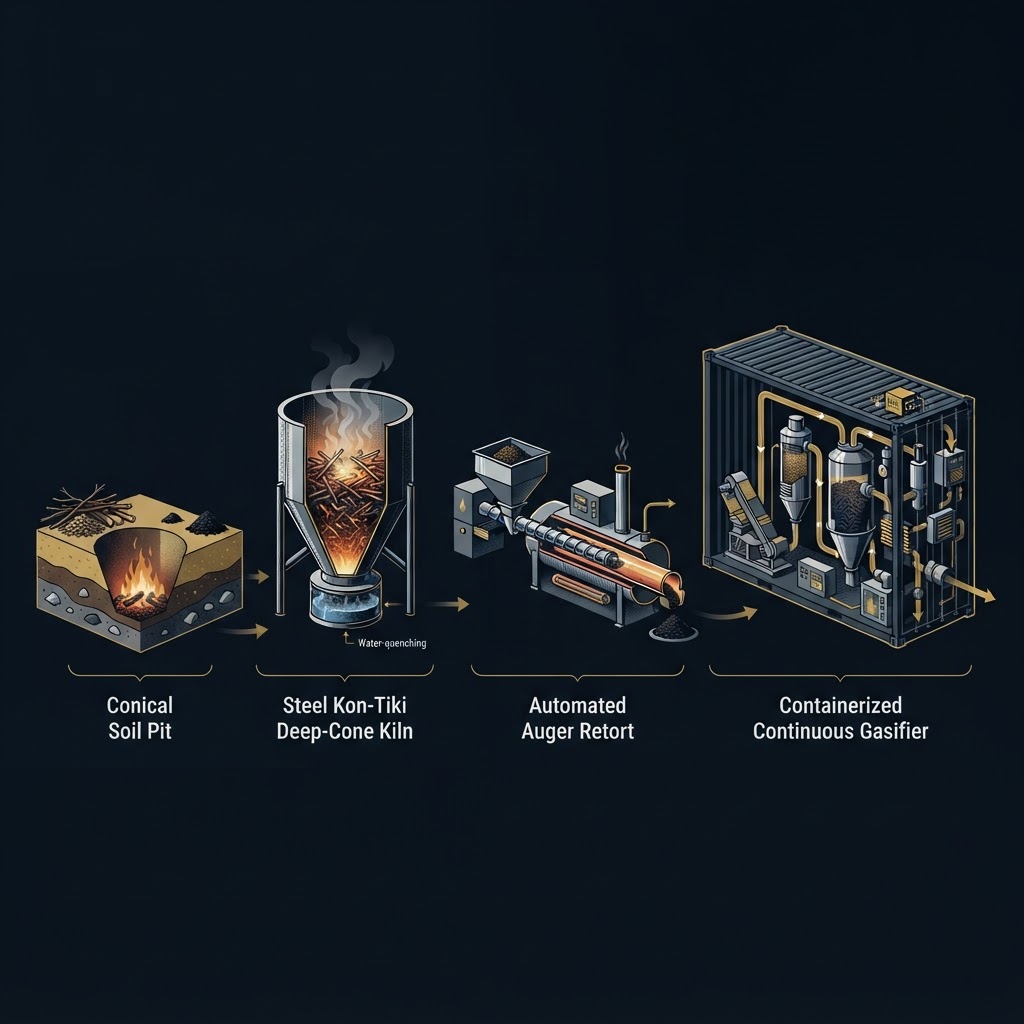
Biochar production equipment compared: $30 Kon-Tiki kilns to $2M continuous plants. Real prices, yields, labor, and when the machine pays for itself.

The Caribbean Math: A Resort's EUR 338,000 Problem, Solved Line by Line
A mid-size Caribbean resort bleeds roughly EUR 338,000 a year on energy and waste. Two X-150 gasifiers eliminate it — EUR 2.3M CAPEX, 13.8% IRR, 6.8 year payback. Here's the deal sheet.
120 Hours, Under 3% Variance: The EQL-150 Prototype Completes Its Longest Continuous Run
The EQL-150 prototype gasifier completed a 120-hour uninterrupted steady-state campaign with syngas LHV variance below 3% — validating a new condition-based ash extraction logic and producing the program's anchor reference dataset.

Everything That Moves: Inside the Walzenrost, the Roller Grate That Survives 950C
The mechanical deep dive into the X-150's counter-rotating Inconel 625 roller grate — how it handles ash fusion, the 18 months of Fraunhofer thermal validation, and the operating envelope the COMETHA campaign established.

EUIPO SME Fund Approval: The Moat Is Now a Funded Line Item
Zero-X has been approved for non-dilutive funding under the EUIPO SME Fund — earmarked for filing patents, trademarks, and design rights protecting the X-150 and SyngaPure.

Zero-X Approved for EUIPO SME Fund Grant to Expand Its IP Portfolio
Zero-X has received approval for funding under the European Union Intellectual Property Office (EUIPO) SME Fund, securing non-dilutive capital to file and prosecute the next wave of patents, trademarks, and design rights protecting the X-150 platform.

The Wrong Tool for the Job: Why 90% of Biomass Is Burned, Not Gasified
The world produces over 2 billion tonnes of municipal solid waste every year and burns or buries nearly all of it. Mass-burn incineration only works above 100,000 tonnes per year; small-scale gasification only works on clean wood chips. The middle — too small for incineration, too dirty for gasification — is the biggest unsolved problem in distributed energy.

1,939 Hours. Three Waste Chemistries. Zero Clinkering Events.
The X-150 gasifier ran 1,939 continuous hours on digestate pellets from MSW, sewage sludge, and horse manure, recording zero clinkering events. The component that made it possible is the Walzenrost — a single rotating grate, six years and four failed prototypes in the making.

750 Million People Choose Between a Flame and the Dark. The X-150 Was Built For Them.
In villages the grid never reached, nightfall is a decision: study by a flame that eats money and lungs, or go dark. Zero-X released a film about that choice, and about the machine that removes it. The X-150 turns the waste already lying on the ground into continuous electricity, validated in 1,939 hours processing 16,382 kg of residue.

The 150 kg/h Gap: Big Enough to Be Real, Small Enough to Ship
Gasification splits into two worlds — lab machines at 5-20 kg/h and industrial plants at tonnes per hour. The X-150 occupies the gap between them at 150 kg/h: real commercial output that ships in one container, connects to a 63A socket, and pays back in under a decade.

Waste In. Energy, Hydrogen, and 40-120 Tonnes of Stored Carbon Out.
Every waste-to-energy story leads with the energy. The X-150 delivers that plus a co-product: 40-120 tonnes of biochar per unit per year, carbon locked for 500-1,000 years and saleable on Verra VM0044 and Puro.earth. 1,939 continuous hours, 33% hydrogen, 99.98% tar conversion. Waste in. Energy, hydrogen, and stored carbon out.

One Rotating Part. Six Years of Failure. Why the X-150's Roller Grate Changes Everything.
Every small-scale gasifier uses a fixed grate and clogs on anything but clean wood chips. The X-150 replaced it with the Walzenrost, rotating rollers that took six years and four failed prototypes to perfect, running 1,939 hours across three ash chemistries with zero clinkering events.

The Waste Plant That Fits in a Shipping Container: 75-82% CHP Efficiency vs 12-15% for Small Steam Turbines
The X-150 is a containerised gasifier that converts non-recyclable waste into electricity, heat, cooling, or clean syngas right where the waste sits. It ran 1,939 continuous hours at a Paris waste facility on digestate with 99.98% tar conversion and 59.1% system efficiency. Small steam turbines top out at 12-15% electrical efficiency; the X-150 CHP train delivers 75-82%.

The Feedstock File — What the X-150 Has Actually Burned
Every small-scale gasifier on the market is rated for one fuel: clean dry wood chips. The X-150 ran for 1,939 hours on digestate pellets from municipal solid waste, sewage sludge, and horse manure at the COMETHA campaign in Paris. No clinkering. No feedstock-related shutdowns. The data is published. The machine is not a prototype.

EU Sewage Sludge Rules Hit in 2029. Every Gasifier on the Market Requires Clean Wood. One Doesn't.
Between 2029 and 2032, thousands of European wastewater treatment plants must comply with new sewage sludge regulations. Almost every small-scale gasifier on the market was designed for clean wood chips. The X-150 is the only gasifier in its class that has proven it can handle high-ash sewage sludge and challenging waste feedstocks — validated over 1,939 hours at COMETHA Paris.

The Patent Strategy Nobody Else Has
Zero-X holds 7 active patent filings across 4 innovations, plus 14 legacy families totaling 47 granted patents. The crown jewel is a perfected provisional for capturing radioactive cesium from contaminated biomass during gasification — derived from research at Fukushima University that no competitor addresses.

Seven Years, Four Prototypes. This Is What We Learned.
Fraunhofer IKTS told Zero-X directly: people do not buy gasifiers. They buy solutions to waste problems. The X-150 runs on the waste nobody else touches — and the bottleneck is no longer technology, it is finding the right local partners.

The New Race Has Already Started — And It Isn't About Oil
Twenty years after the vision, the X-150 is leaving a factory floor in China — validated over 1,939 hours, 33% hydrogen syngas, shipping commercial units to Europe. The decentralized energy race is happening now.

Competitors Are Leaving EUR 4.9 Million on the Table. Here Is the Playbook to Claim It.
Spain covers 70% of an X-150 project in Cadiz. Portugal pays 60%. Greece pays 56%. Most cleantech never claims a euro of this money. Here's the playbook that turns allocated EU capital into deployed plants.

The Seven Years That Built the X-150 — And Why Selling Machines Is the Wrong Goal
Four failed prototypes, a 1,939-hour validation campaign, and a fundamental lesson from Fraunhofer IKTS: stop selling gasifiers and start selling outcomes.

Halfway Through 2026. Here Is Where the SyngaPure Project Actually Stands.
Zero-X's BMWK go-inno backed SyngaPure development has moved from slide-deck stage to a working engineering plan, with component prototyping starting Q3 on the catalytic tar reforming stage.

Why Clean Syngas From Waste Is Moving From Research to Deployable Reality
By 2030, clean syngas from waste won't be a research question — it will be a deployable industrial capability. Here's why the curve is bending faster than the industry expects.

33% Hydrogen Changes Everything About Small-Scale Gasification. Here's the Data.
The X-150's 1,939-hour oxy-steam campaign delivered 33% hydrogen, zero nitrogen, and an H2/CO ratio of 1.95 — putting its syngas within Fischer-Tropsch feed specs at a scale no competitor has demonstrated.

The Decision That Gave SyngaPure 99.98% Tar Conversion — And Why Nobody Else Makes It
SyngaPure's integrated AI control layer — not a better catalyst — is what gives the X-150 99.98% tar conversion across shifting waste feedstocks.

80 Days, Zero Nitrogen: The Container-Sized Gasifier That Changes the Economics of Waste
The X-150 turns 150 kg of waste per hour into electricity, heat, and cooling — validated over 80 continuous days in Paris, with near-zero emissions and commercial deployment ready today.

The X-150: The Waste-to-Energy Machine Africa Has Been Waiting For
A new video tells the story of how the ZeroX X-150 is turning community waste into reliable, off-grid electricity — and cutting energy costs by 70%.

Zero-X Technologies Announces New Investment to Accelerate Waste-to-Chemicals Expansion
Zero-X Technologies shares an investment milestone advancing its waste-to-chemicals and circular economy mission.
Available for advisory work, board seats and media appearances.
Julien Uhlig advises boards and funds and briefs newsrooms across Europe and North America. Enquiries are read personally.
We use cookies to improve your experience on this site. By continuing, you agree to our Privacy Notice.