Waste to Energy in Nigeria: Projects, Rules and Economics
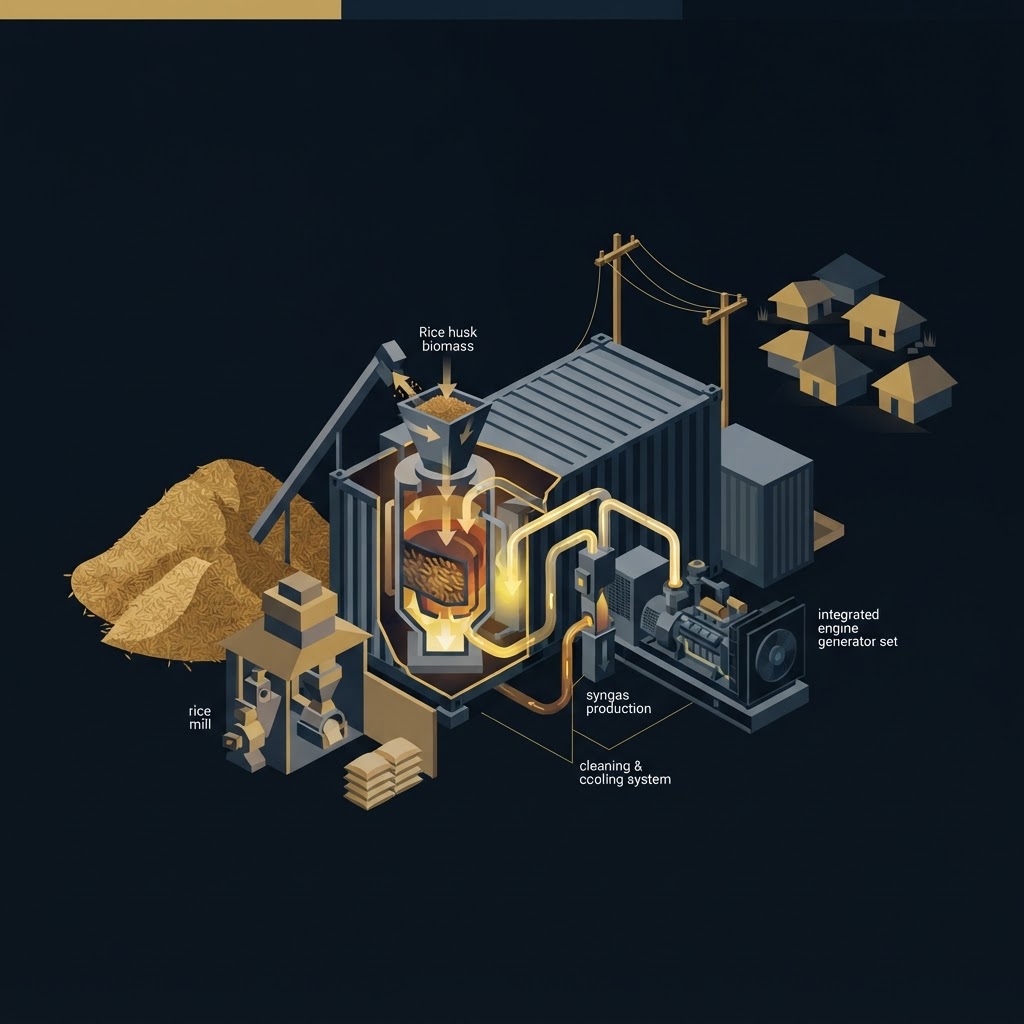
Waste to energy in Nigeria starts with two numbers that sit side by side. Lagos alone generates roughly 13,000 to 15,000 tonnes of waste a day, by LAWMA's estimate. And residents of Lagos and Abuja get just 1 to 5 hours of public electricity a day, so households and businesses run standby diesel generators to fill the gap.
Put those together and the idea sells itself: burn, digest or gasify the rubbish, and light the city. What is new in 2026 is that real projects and real rules exist, so a developer can finally ask a sharper question: which kind of waste to energy project actually gets built first, and where?
This guide answers that with numbers per tonne, the two project tracks Nigeria is running, the 2026 permit rules, and the lessons from the plants that stalled.
Why waste to energy in Nigeria keeps coming back
The power side of the case is structural. The World Bank's National Energy Compact for Nigeria reports 61% electricity access in 2022, which leaves more than 86 million people without power. It also estimates that private generators supply about ten times the grid's roughly 4 GW. Every one of those generators is a customer already paying fuel prices for every kilowatt hour.
The waste side is just as hard. Collection is patchy, dumpsites are full, and blocked drains turn rubbish into a flood problem every rainy season. A plant that takes waste off the street and sells power is solving two budget lines at once, which is why it keeps returning to state agendas.
How much energy Nigeria's waste could make
National potential
A 2024 study in Clean Energy estimates that 27.36 million tonnes of organic waste a year, burned with energy recovery, could generate 14.52 to 23.08 TWh of electricity annually. Add paper and textiles and the range rises to 18.69 to 29.71 TWh.
Treat that as a ceiling, not a forecast. When Unaegbu and Baker took out the recyclable fraction first, residual waste came to 475 GWh a year in Lagos and 54 GWh a year in Abuja. That is a far smaller number, and a far more honest starting point for a project.
What one tonne yields, by technology
The figure a developer needs is energy per tonne, because that is what the feedstock contract buys. The Lagos and Abuja life cycle study by Nubi, Morse and Murphy compared four routes:
| Route | Electricity per tonne of MSW, Lagos | Abuja |
|---|---|---|
| Anaerobic digestion | 683 kWh | 667 kWh |
| Landfill gas to energy | 171 kWh | 135 kWh |
Digestion came out on top because Nigerian city waste is food heavy. LAWMA reported that about 6,500 of the roughly 13,000 tonnes Lagos produced each day in 2025 were organic. Landfill gas came last, recovering about a quarter of the energy of digestion.
Cheapest is not the same as cleanest, though. The follow-up sustainability assessment by the same team found digestion best on environmental impact but incineration best on life-cycle cost in both cities. Your choice depends on what the site is optimising for.
Outside the cities the feedstock changes. The UNIDO biomass mini-grid evaluation quotes its 2011 project document: 83 million tonnes of crop residues and 61 million tonnes of animal waste are mostly dumped or burned, plus the wood waste of hundreds of sawmills. Those residues are drier and more concentrated than street waste, which matters for the technology choice below. We map them by region in our guide to biochar production in Nigeria.
Track one: the Lagos megaproject
The headline project is in Epe. Lagos State's environment commissioner Tokunbo Wahab presented it at the Lagos Investors Summit, and the state ministry's summary lays out the case:
- About 80% of landfill capacity is near the end of its life.
- Formal collection covers 63%, and 67% of households resort to illegal dumping.
- Projected CAPEX is around USD 400 million.
- The plant is modelled at a 12% internal rate of return over 20 years, underpinned by electricity sales and a new tipping fee.
- The state says it could supply clean power for up to 2 million Lagosians.
LAWMA announced in March 2026 that the Epe plant would process about 3,000 tonnes a day, and the state has also discussed a 60 to 80 MW project at the Epe landfill with Harvest Waste Consortium.
All of these are plans. None of it is operating capacity yet, and the business case leans on a tipping fee that does not exist today. That is the real lesson of track one. A city megaplant is a waste-management concession first and a power plant second. It lives or dies on whether the state can charge, collect and guarantee that gate fee for twenty years.
Track two: small plants at the waste source
The second track gets less press and is closer to bankable. It is a plant sized to one waste stream that already sits in one place: a rice mill, a sawmill, an abattoir, a market, a hotel or an industrial estate. The plant feeds power to the site and its neighbours, displacing the diesel generator that is already running there. If you are still comparing every option for a business site, Energaia sets out the diesel generator alternatives for businesses in Nigeria side by side. This is the model we cover in our guide to small scale waste to energy systems, and the wider power case in off grid power solutions.
The rules: NERC Mini-Grid Regulations 2026
Nigeria now has a clear legal home for this model. The NERC Mini-Grid Regulations 2026, made under the Electricity Act 2023, apply to isolated mini-grids up to 5 MW per site and interconnected mini-grids up to 10 MW per site. Three points matter for waste plants:
- Isolated sites get a permit in a designated unserved area, as long as the plan does not clash with the distribution company's approved expansion plan.
- Interconnected sites need a tripartite agreement between the community, the developer and the distribution licensee, with a tariff set by NERC's mini-grid model.
- Waste and biomass plants carry a heavier environmental load than solar. Solar and battery mini-grids up to 10 MW need only screening and a management plan. Biomass and thermal generation needs a full ESIA.
Where a state has set up its own electricity regulator, the state takes over intrastate matters. Check which regulator covers your site before you budget the permit path.
What the Ebonyi rice husk plants teach
Nigeria has already tried this, and the record is sobering. The UNIDO and GEF project aimed to add 5 MW of biomass mini-grid capacity. Two rice husk plants were built in Ebonyi State, at Ikwo (1,000 kW) and Uburu (500 kW). The 2022 evaluation found that neither had been completed since 2016. Both were standing rusting, each with a snagging list of 20 crucial items. The wood waste schemes planned for Ondo and Ogun never reached financial close.
The feedstock was there. What failed was completion, commissioning and the operating capacity to finish and run the plants. That pattern is common worldwide, and we break it down in why gasification plants fail. For a Nigerian buyer the takeaway is blunt: pay for validated operating hours and a local service model, not for nameplate kW.
The economics can work when the structure is right. A modelling study for rural Borno State found that capital subsidies of 25 to 40%, such as those under the REA's DARES programme, could bring biomass mini-grid power below USD 0.15 per kWh. Clustering communities within 10 km collection zones also improved viability. It is a model, not a measured plant, but it shows where the levers are: subsidy, anchor load and short haul distances.
Choosing the technology for a Nigerian site
Match the machine to the waste, not to the brochure.
- Wet food and market waste: anaerobic digestion. It had the best yield per tonne in the Lagos and Abuja study, and food is the dominant fraction.
- Dry residues and mixed waste, where the site needs power: gasification. Rice husk, sawdust, corn cobs, sorted MSW and sludge turn into a syngas that runs an engine, with biochar as a by-product.
- Old dumpsites: landfill gas capture is better than nothing, but it gave the lowest yield of the four routes and a much higher climate impact from fugitive methane.
- City-scale mixed waste with a tipping fee: incineration, the cheapest route on life-cycle cost, if the concession can carry the emissions control it needs.
Gasification is where Zero-X works. The X-150 is a containerized 150 kg/h fixed-bed downdraft gasifier that turns waste into syngas, hydrogen and biochar. It has been validated on high-ash sludge, MSW and digestate, the feedstocks clean-wood gasifiers cannot handle. Given the Ebonyi record, the number we lead with is hours, not kW. The X-150 completed a 1,939-hour continuous campaign in Paris, processing 16,382 kg of digestate pellets.
Be clear about scale. At 150 kg/h, one unit running around the clock takes about 3.6 tonnes a day. The Epe plan is 3,000 tonnes a day. One X-150 does not compete with a city megaplant. It is sized for the mill, the estate or the market that produces a few tonnes a day and is burning diesel to stay open. Units add up in modules as feedstock grows.
A checklist before you commit to a Nigerian waste to energy project
- Lock the feedstock in writing. Sign with the mill, market or authority that already concentrates the waste. Test moisture in both the rainy and the dry season.
- Name your revenue line. It is either a tipping fee someone will really pay, or diesel you will really displace. A project that needs both to be invented will stall.
- Pick the regulator early. NERC or a state commission, isolated or interconnected, and budget a full ESIA for any thermal or biomass plant.
- Buy proven hours, not nameplate. Ask for continuous run data on a feedstock like yours, and a named local O&M team.
- Build the subsidy in from day one. Capital grants change the tariff you can offer. Our guide to waste to energy funding opportunities covers the routes.
- Plan the next site before the first one is finished. Modular plants pay off when a developer repeats them. The same playbook travels across the region, as we show in waste to energy in Africa and in our comparison of alternatives to diesel generators off grid.
FAQ
Is there a working waste to energy plant in Nigeria?
Not at city scale yet. The Lagos Epe plant and the 60 to 80 MW Epe landfill project are planned, not generating. The Ebonyi rice husk mini-grid plants were still unfinished at the 2022 UNIDO evaluation.
Which waste to energy technology suits Nigeria best?
It depends on the waste. Anaerobic digestion gives the most power from food-heavy city waste, incineration is cheapest at city scale on life-cycle cost, and gasification fits dry residues and mixed waste at sites that need their own power.
Do you need a licence to sell electricity from a waste plant in Nigeria?
Yes. Under NERC's 2026 Mini-Grid Regulations, isolated sites up to 5 MW need a permit and interconnected sites up to 10 MW need a tripartite agreement with the distribution company and community. Biomass and thermal plants also need a full ESIA.
Can waste to energy replace diesel generators in Nigeria?
At site scale, yes, where a steady waste stream sits next to the load. In the Lagos and Abuja life cycle study, diesel backup generators had the highest or second highest environmental impact in every category, so displacing diesel is the clearest environmental win.
We use cookies to improve your experience on this site. By continuing, you agree to our Privacy Notice.