Three Routes, Three Questions
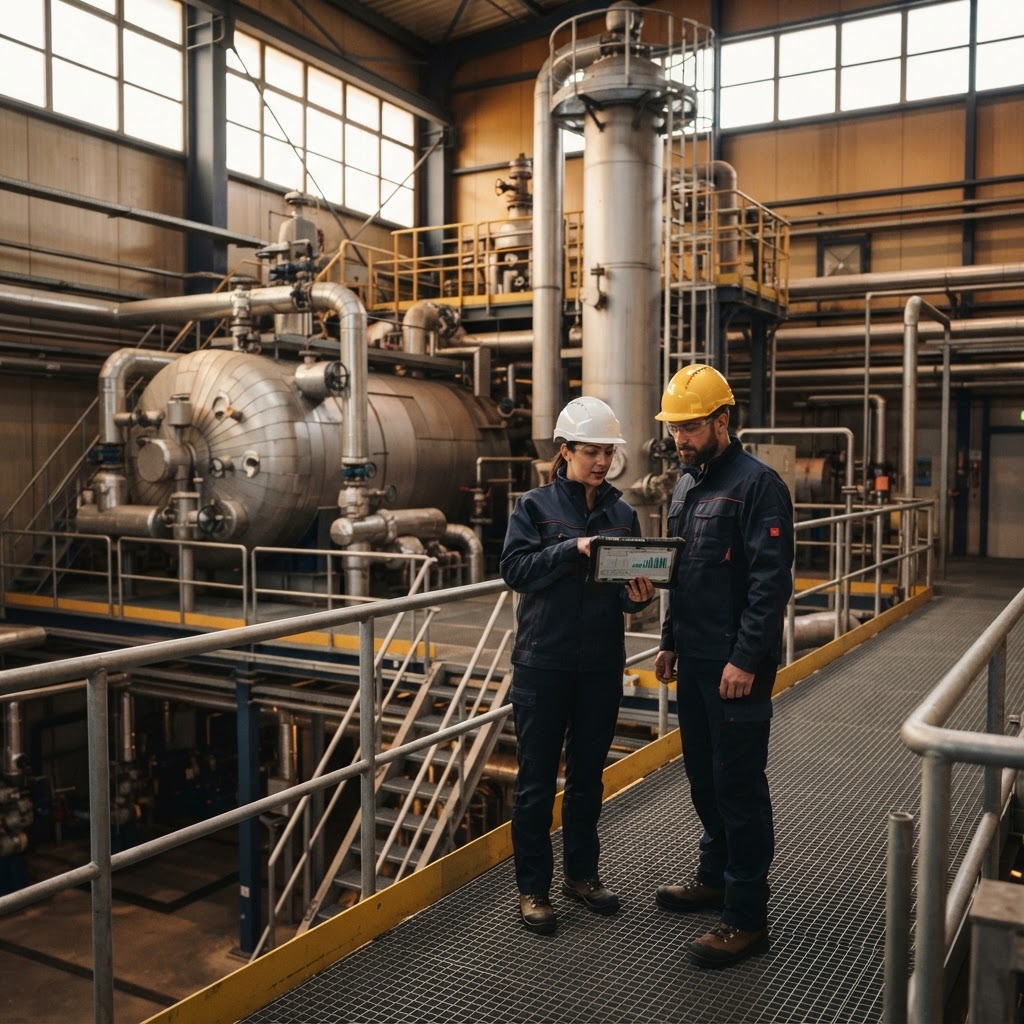
Incineration, anaerobic digestion and gasification are usually presented as competitors. They are not. Each one answers a different question, and most project mistakes begin with asking the wrong one.
Every waste stream that cannot be recycled has to go somewhere, and for the last few decades the thermal and biological options have been argued over as though one of them had to win. That framing has cost the industry a great deal of money, because it leads projects to pick a technology first and then search for the feedstock and the market that justify it.
The better order is the reverse. Start with what you have, decide what you want it to become, and the route follows.
INCINERATION: THE HEAT QUESTION
Incineration burns waste with excess air and recovers the heat. It is the oldest of the three and by a wide margin the most widely deployed.
Its strengths are real. It handles almost any solid waste without pre-treatment, it is proven at very large scale, and its emissions control is mature and well regulated. Where a plant has a heat customer - a district heating network, an industrial process - it is hard to beat on simplicity.
Its limit is equally clear. The output is heat, and electricity made from that heat. Nothing else. The carbon in the waste leaves as carbon dioxide, the minerals leave as ash, and neither is a product. Incineration answers the question "how do I get rid of this and recover some energy" and no other.
ANAEROBIC DIGESTION: THE WET ORGANICS QUESTION
Anaerobic digestion lets bacteria break down wet organic material in the absence of oxygen and collects the methane they produce as biogas.
It is a gentle, low-temperature process, and for the right feedstock it is excellent: food waste, agricultural residues, manure, sewage sludge. The biogas can run an engine, be upgraded to grid-quality methane, or be used directly as fuel. The process also returns nutrients in a form that can, within limits, go back to land.
Its boundaries are biological. The bacteria will not eat plastics, wood, textiles or anything lignified. Mixed residual waste is out. Contamination is a constant problem. And the process leaves a digestate - a wet, nutrient-rich residue - that still has to go somewhere, with its own classification and disposal questions. Digestion answers "how do I turn wet organics into gas" and stops there.
GASIFICATION: THE PRODUCT QUESTION
Gasification heats waste with too little oxygen to burn it. Instead of releasing the energy as heat, the process converts the material into a gas - mainly hydrogen and carbon monoxide - that can be cleaned and then used.
The gas is the point. It can be burned in an engine for power, which puts gasification alongside incineration. But it can also be taken further: into methanol, into liquid fuels, into hydrogen. Those are routes the other two cannot reach, and they are products that pay more than heat. The solid that leaves the reactor retains carbon rather than being reduced to mineral ash, which opens a second output stream.
The price of that flexibility is a cleaning stage that incineration does not need. Raw syngas carries tar, sulfur and chlorine compounds, ammonia and dust, and every one of them has to be removed to a standard set by whatever the gas is going to feed. That cleaning stage is where the engineering lives, and it is where many gasification projects have struggled. Gasification answers "how do I turn this waste into a product worth more than heat" - and that is a harder question, with a harder answer.
WHAT EACH ROUTE CANNOT DO
The honest comparison is the list of limits.
Incineration cannot make a product. Its efficiency into electricity alone is modest, and without a heat customer the economics depend heavily on the gate fee.
Digestion cannot handle anything the bacteria will not eat, cannot reach high conversion of difficult organics, and leaves a digestate that is often more of a problem than the feedstock was.
Gasification cannot avoid cleaning the gas, cannot be run casually on highly variable feedstock without pre-treatment and control, and carries a development and operating complexity that the other two routes do not. The industry has a history of plants that underestimated this, and that history is the reason the route is treated with caution.
None of these is a flaw. Each is a boundary, and projects go wrong when they are planned as though the boundary were not there.
THE ROUTES ARE NOT EXCLUSIVE
The most useful observation is that the three can be combined, and often should be.
Digestate from an anaerobic plant is a difficult residue for the digester and a feedstock for a gasifier. A gasifier's clean gas can run the same engine an incinerator's heat would have fed. A site with mixed waste and a heat customer can incinerate the bulk and gasify the fraction that is worth more as a product.
This is why the competitive framing is so unhelpful. The actual design question is which route each part of the waste stream should take, and in a well-designed system the answer is often more than one.
HOW TO CHOOSE
Three questions settle most cases.
What is the feedstock, and how variable is it? Wet, clean organics point to digestion. Mixed residual waste points to incineration or gasification. Difficult, high-ash or contaminated material - sewage sludge, digestate, industrial residues - narrows the options sharply, and gasification is one of the few routes built for it.
What is the product, and who buys it? If there is a heat or power customer and nothing more is needed, incineration or digestion is probably the right scale of complexity. If the project depends on selling a fuel, a chemical or hydrogen, gasification is the only route that gets there.
What can the project actually operate? Gasification earns its complexity only where the product justifies it. A plant that could have incinerated and chose to gasify for prestige has made an expensive mistake. A plant that incinerated when the feedstock could have become a product has left money on the table.
THE QUESTION BEHIND THE QUESTION
Underneath all of this is the question most projects never state directly: is this waste a problem to dispose of, or a resource to convert.
Incineration is a disposal technology with energy recovery attached. Digestion is a conversion technology for one class of material. Gasification is a conversion technology for the difficult remainder, with a product range the others cannot match and a cleaning stage they do not need.
Which of those describes your project decides the route. Not the other way round.
Talk to us at zero-x.co
We use cookies to improve your experience on this site. By continuing, you agree to our Privacy Notice.