The Feedstock Nobody Wants
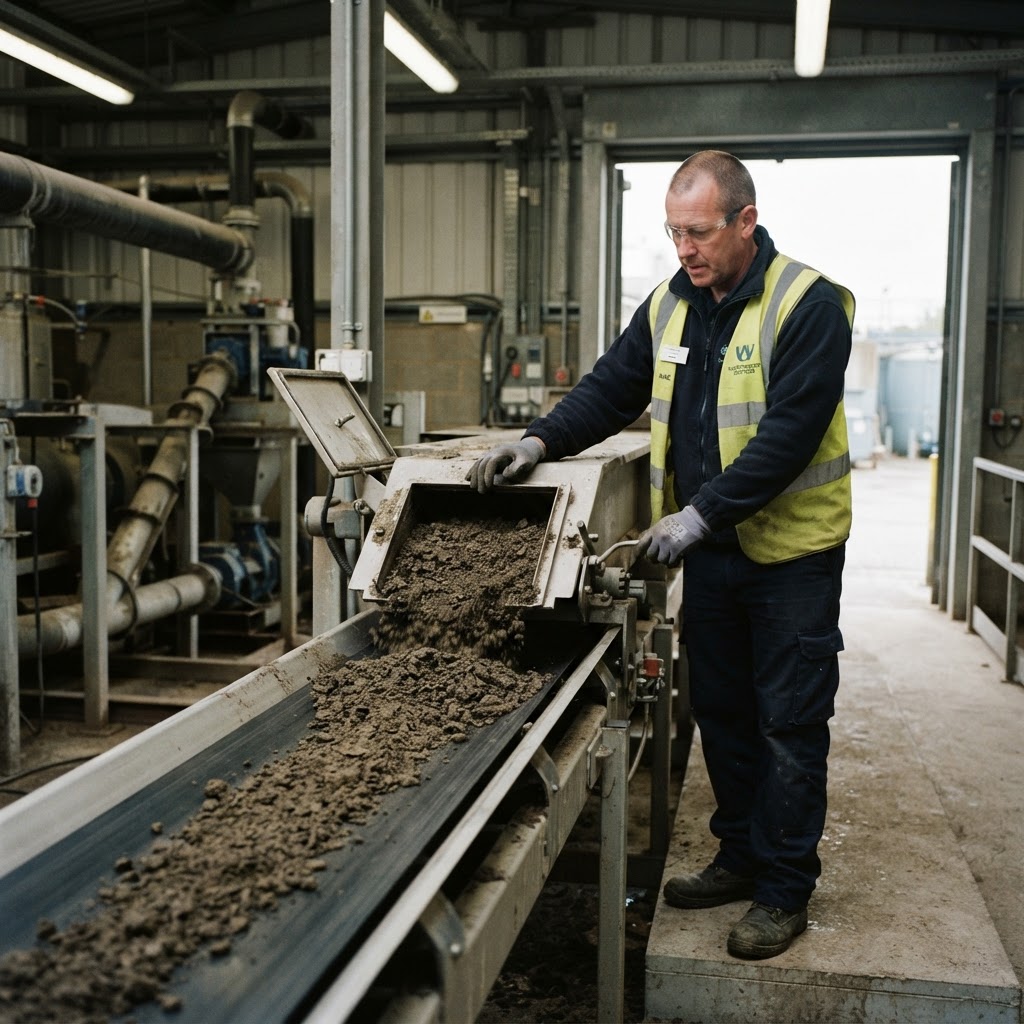
Most gasifiers are designed for the material that is easiest to gasify. The X-150 was designed for the one that is hardest to get rid of.
Sewage sludge is the awkward case in waste treatment. It is wet, it is high in ash, and it carries phosphorus, heavy metals and whatever a city flushed last week. For decades the simplest answer was to spread it on farmland. That answer is closing across Europe, and the volumes are not going anywhere.
The X-150 gasification platform was built around that material - alongside municipal solid waste and digestate - not because it is convenient, but because it is where the volumes are, and where the regulation is heading.
WHY SLUDGE IS THE HARD CASE
Clean wood chips are the easy feedstock. Dry, uniform, low in ash, well understood. A great deal of gasification experience exists on exactly that material, and it tells you little about the hard cases.
Sewage sludge is difficult in three ways at once.
It is wet. Even after mechanical dewatering, a large share of what arrives is water. That water has to be driven off before anything useful happens, and the energy to do it comes out of the plant's own balance.
It is high in ash. A substantial fraction of the dry solids is mineral and will not gasify. That ash has to pass through the reactor without melting into agglomerates that block it, and it has to leave as a solid that can be handled.
It is contaminated and variable. Phosphorus, heavy metals, pharmaceuticals, microplastics, nitrogen and sulfur compounds, all varying by catchment, season and treatment process. The composition that arrives on Monday is not the composition that arrives on Thursday.
A gasifier that handles that has solved a harder problem than one that handles biomass. The reverse is not true.
WHAT THE REGULATION IS DOING
For most of the last century, sludge disposal was an agricultural question. Treated sludge went to land as fertiliser, because it contains nutrients that crops can use.
That route is narrowing. Concern about heavy metals, pharmaceuticals and persistent contaminants has led a growing number of European jurisdictions to restrict or phase out land application. Germany has gone further and mandated phosphorus recovery from sludge at larger treatment works, with the obligation phasing in over the coming years.
The consequence is a large, regulated waste stream that must be treated thermally and from which a specific element must be recovered. That is not a market being created by subsidy. It is a market being created by the removal of the cheapest alternative.
WHAT HAPPENS TO THE PHOSPHORUS
Phosphorus is the reason sludge is interesting rather than merely difficult.
It is an essential nutrient with no substitute, Europe imports almost all of it, and it is concentrated in sewage sludge in quantities that matter. Burning sludge destroys the organics but leaves the phosphorus in the ash, where it is recoverable in principle but locked into a mineral matrix that is expensive to process.
Gasification handles the material differently. The carbon is converted to gas while the mineral fraction, including the phosphorus, concentrates in the solid that leaves the reactor. Whether that solid becomes a saleable phosphorus product or a disposal cost depends on the same things as any waste-derived material: what contaminants came in, where they ended up, and what the receiving regulation allows.
That is a real question with a real answer for each specific feedstock, and it has to be established by testing rather than asserted. It is also the question the sludge mandate is forcing every operator to answer.
TESTED OUTSIDE OUR OWN WALLS
A technology provider's own test results prove the technology works for the technology provider. Independent operation on real material is the test that counts.
The X-150 has been operated by third parties: COMETHA in Paris, Fraunhofer IKTS, and Hochschule Zittau/Görlitz. Those are research and engineering organisations with their own instrumentation, their own staff and no interest in a favourable result. Their operating experience on actual feedstock is what distinguishes a platform from a prototype.
It also matters for the question lenders and partners ask first: who, other than the developer, has run this thing?
THE HONEST PART
Handling difficult feedstock does not make the difficulties disappear. It moves them to places where they can be managed.
Moisture has to be dealt with, and drying costs energy. High ash still has to be removed and handled, and the handling has to be designed. Contaminants concentrate somewhere, and that somewhere has to be characterised and classified before anyone can claim a product rather than a waste. Variability in the incoming material still demands pre-treatment and control.
A platform built for sludge has solved the reactor problem. It has not, by itself, solved the project problem. That takes the plant around it, the contracts above it, and the operating record that accumulates only through running on real material over time.
WHAT IT MEANS FOR A SITE
If you operate a wastewater treatment works, or you are responsible for a municipal waste stream that is losing its disposal route, the useful questions are practical ones.
What does your sludge actually contain, and how does it vary over a year?
What does the regulation in your jurisdiction now require of it, and by when?
What happens to the phosphorus, and is there a receiving route for the solid?
And who, other than the technology provider, has operated the system you are being offered?
Zero-X holds the global master license to the X-150 platform. The partners who deploy it own their territories. If sludge is the feedstock you have the most of and the fewest options for, that is the conversation worth having.
Talk to us at zero-x.co.
We use cookies to improve your experience on this site. By continuing, you agree to our Privacy Notice.