Why the Future of Clean Energy is Small, Modular, and Running on Your Trash
In 2019, a team of German engineers faced a mathematical impossibility. Their client needed to eliminate 500 tons of unrecyclable industrial waste annually, but the nearest waste-to-energy facility required a $300 million capital investment and a 12-year permitting timeline. The gap between the problem and the solution was economically absurd—and it exposed why the global waste crisis persists despite $500 billion in annual management spending.
In 2019, a team of German engineers faced a mathematical impossibility. Their client needed to eliminate 500 tons of unrecyclable industrial waste annually, but the nearest waste-to-energy facility required a $300 million capital investment and a 12-year permitting timeline. The gap between the problem and the solution was economically absurd—and it exposed why the global waste crisis persists despite $500 billion in annual management spending.
The world generates 2.01 billion tonnes of municipal solid waste annually, according to World Bank data, yet only 9% of all plastics ever produced have been recycled due to contamination and mixed-polymer complexity. Traditional waste-to-energy infrastructure has responded to this crisis with gigantism: massive incineration plants processing 300,000+ tonnes yearly, requiring concentrated waste streams that only mega-cities can provide. This centralized model leaves small and medium enterprises, rural municipalities, and distributed industrial facilities with only one option: landfilling at $50-$150 per tonne while trucking waste hundreds of kilometers to centralized facilities with carbon footprints that negate their environmental benefits.
## Breaking the Tyranny of Economies of Scale
The breakthrough required rejecting the centralization paradigm entirely. Zero-X Carbon Conversion recognized that thermal gasification—converting waste into synthetic gas (syngas) through high-temperature partial oxidation—could operate efficiently at small scales if the engineering prioritized modularity over throughput. Unlike mass-burn incineration, which requires constant high-volume feedstock to maintain combustion temperatures, gasification systems can modulate output and process diverse waste streams including contaminated plastics, rubber, and composite materials that mechanical recycling cannot handle.
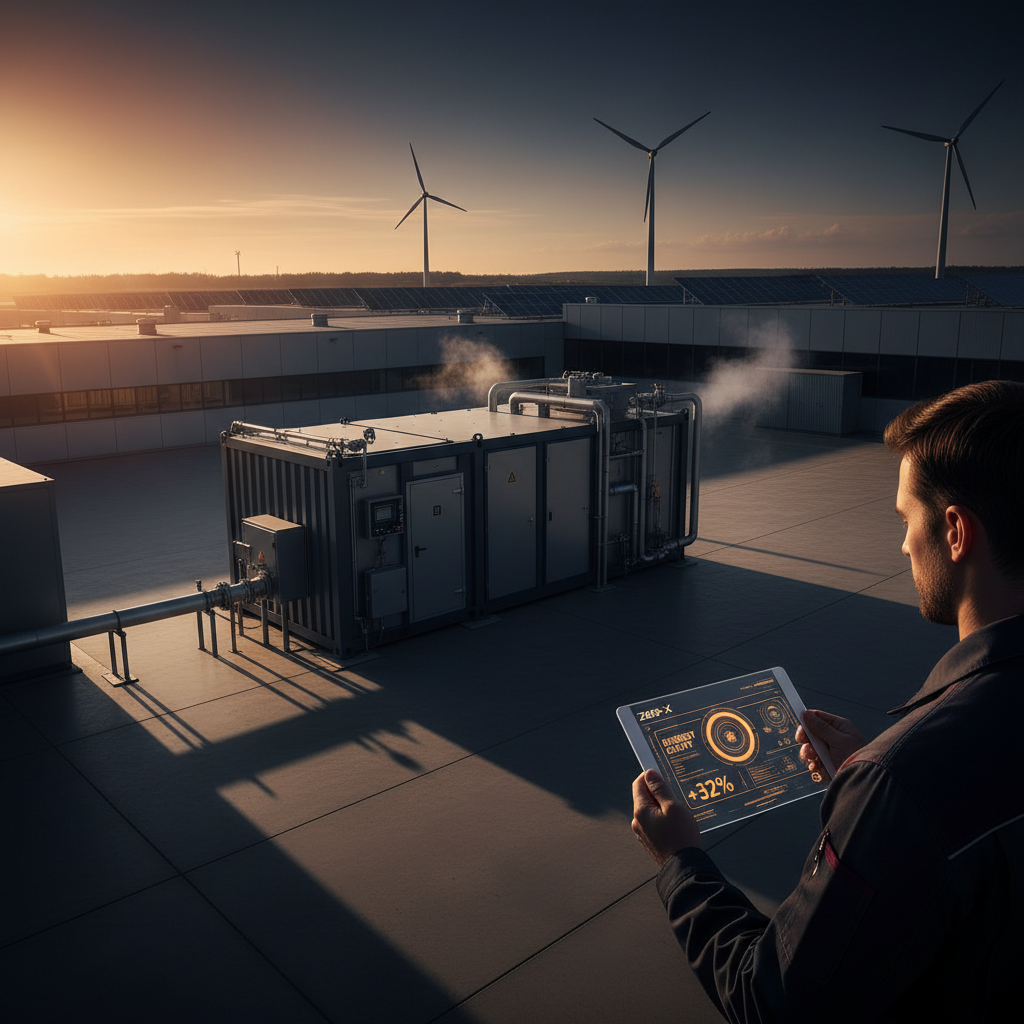
The X-150 system represents this architectural shift. At 150kW thermal output, it occupies roughly the footprint of two shipping containers, enabling deployment adjacent to waste generation points—factories, hospitals, or agricultural processing facilities. This distributed model eliminates the diseconomies of transportation that plague centralized waste management, where moving low-density waste often consumes more energy than the recovery process generates. By co-locating waste conversion with thermal demand, the system achieves net-negative carbon intensity when replacing fossil fuel heat sources, particularly in industrial processes that require 24/7 thermal baseloads.
## The 2,500-Hour Proof Point and German Engineering Rigor
Technical viability in clean energy requires more than laboratory validation; it demands continuous operational proof under real-world regulatory scrutiny. Zero-X’s X-150 system has accumulated over 2,500 certified operating hours in Germany, a jurisdiction with the continent’s most stringent emissions standards under the TA Luft (Technical Instructions on Air Quality Control) framework. This certification matters because it demonstrates compliance with EU Industrial Emissions Directive (2010/75/EU) limits for particulate matter, dioxins, and NOx emissions—standards that exceed U.S. EPA requirements by 30-40% on key pollutants.
The significance of these operating hours extends beyond regulatory box-checking. In the waste-to-energy sector, the valley of death between pilot demonstration and commercial deployment occurs between 1,000 and 3,000 operating hours, when thermal stress cracks, feedstock variability, and tar buildup typically force maintenance shutdowns. Surpassing 2,500 hours indicates the system has solved the materials science challenges of high-temperature corrosion and achieved feedstock flexibility—the ability to switch between rubber, mixed plastics, and biomass without manual recalibration. This operational resilience transforms the technology from an experimental pilot into industrial infrastructure.
## From Linear to Circular: Implementation Playbooks for Facility Managers
This technical validation opens a broader strategic opportunity for industrial decarbonization. Thermal energy accounts for 74% of industrial energy demand globally, according to the International Energy Agency, yet most facilities still rely on natural gas or heating oil. For operations managers considering this transition, the implementation pathway requires specific technical and regulatory steps.
First, conduct a waste composition audit using ASTM D5231 methodology to quantify the calorific value (MJ/kg) of your unrecyclable waste streams. Materials with >15 MJ/kg—such as contaminated PE films, automotive shredder residue, or medical waste—provide optimal gasification feedstock. Second, assess thermal demand using degree-day analysis to determine baseload heat requirements; the X-150 system achieves optimal efficiency at 80-90% capacity factor, making it ideal for processes requiring continuous heat, cooling (via absorption chillers), or electricity generation through syngas-fed generators.
Regulatory navigation requires understanding the RCRA permit-by-rule exemptions in the U.S. or the Waste Framework Directive end-of-waste criteria in the EU, which classify gasification outputs as products rather than waste if they meet specific quality standards. Facilities should engage environmental consultants early to establish mass balance documentation—tracking waste inputs against energy outputs—to qualify for renewable energy certificates (RECs) and carbon credits under the Greenhouse Gas Protocol Scope 1 reduction methodologies.
## The Distributed Energy Revolution
The implications extend beyond single-facility economics. By decentralizing waste conversion, Zero-X enables microgrids of circularity—industrial parks where one facility’s waste becomes another’s thermal input, creating industrial symbiosis networks that mimic natural ecosystems. This approach addresses the NIMBY (Not In My Backyard) opposition that has stalled 60% of proposed waste-to-energy projects in OECD countries by eliminating the visual and logistical impact of waste transport.
As the EU’s Carbon Border Adjustment Mechanism (CBAM) phases in during 2026-2034, embedding carbon costs into imported goods, on-site waste-to-energy conversion provides Scope 1 emissions reductions that directly improve competitive positioning. For facility managers, the question is no longer whether small-scale gasification works—the 2,500-hour German certification has settled that—but how quickly they can integrate it into their decarbonization roadmaps before regulatory compliance becomes market survival.
Meta Description Suggestion: Discover how Zero-X's modular X-150 gasification system transforms unrecyclable waste into clean thermal energy, with 2,500+ certified operating hours and German emissions compliance—enabling distributed industrial decarbonization.